



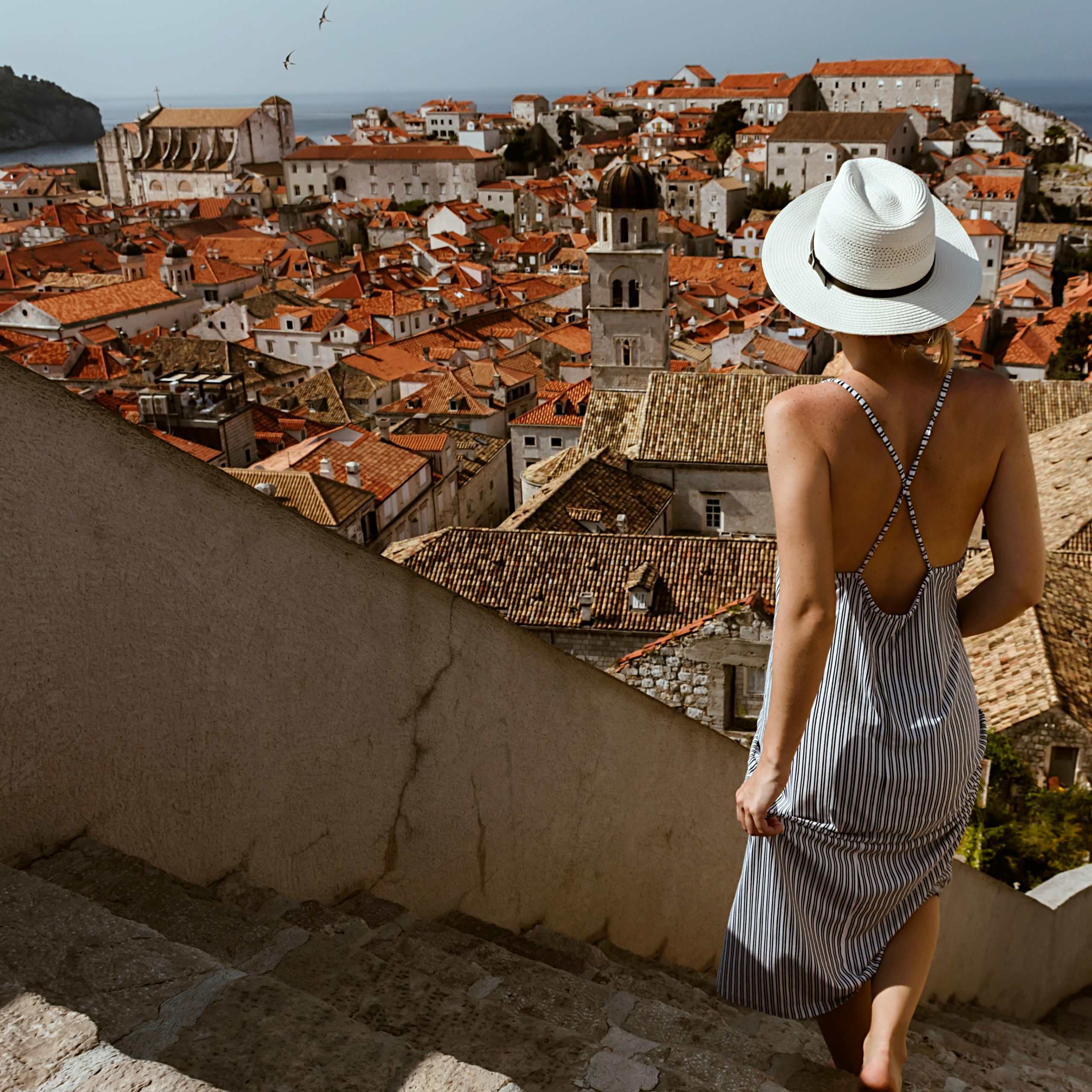
From Diocletian’s Palace in Split with its remarkably well-preserved Roman architecture to the walled Old City of Dubrovnik and the capital of Zagreb, Croatia boasts many intriguing cities. While there are many beautiful beaches to lounge on and swim from, you’ll want to put at least a few of them on your itinerary. Spend time exploring historical landmarks, world-class museums, art galleries, and nearly an endless array of shopping venues, including many offering locally and regionally made items. When it’s time to dine, the options are many too, with many eateries serving farm- and sea-to-table cuisine that can be paired with fine Croatian wines. It would be challenging to experience them all, consider some of these top cities to visit in Croatia.
Dubrovnik
One of the most popular cities to visit on any Croatia vacation, Dubrovnik‘s beauty has been spotlighted frequently on-screen, in everything from the hit series “Game of Thrones” to “Vikings: Valhalla.” Its medieval walled Old City is a top draw. One can even take a stroll along the 1.2-mile-long walls that overlook the red-topped roofs in the historic center on one side and the sea and nearby islands on the other. But you’ll want to step through one of the imposing gates to explore the interior too, with landmarks like Onofrio’s Fountains, part of the 15th-century water supply system, the Renaissance-style Rector’s Palace and Sponza Palace, and one of the oldest still-active pharmacies at the Franciscan monastery.
Split
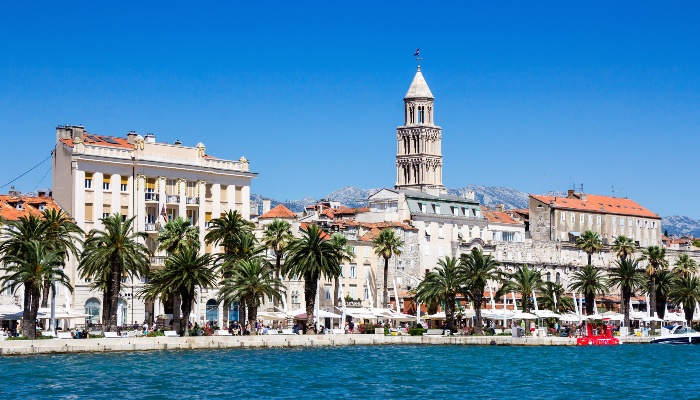
The second-largest city in Croatia, ancient Split has a rich history, established in the late 3rd century AD when Roman Emperor Diocletian chose the site for his retirement residence. Its history actually goes back even further with a Greek settlement here in the 3rd century BC. The star attraction is Diocletian’s Palace, home to some of the world’s best preserved Roman architecture, including the The Cathedral of Saint Domnius. Originally built as a mausoleum for Emperor Diocletian, it was consecrated at the turn of the 7th century AD and regarded as the world’s oldest Catholic cathedral. Many buildings here now house galleries, shops, wine bars, and eateries. The Riva waterfront promenade is ideal for a stroll and nearby are several beaches.
Zagreb
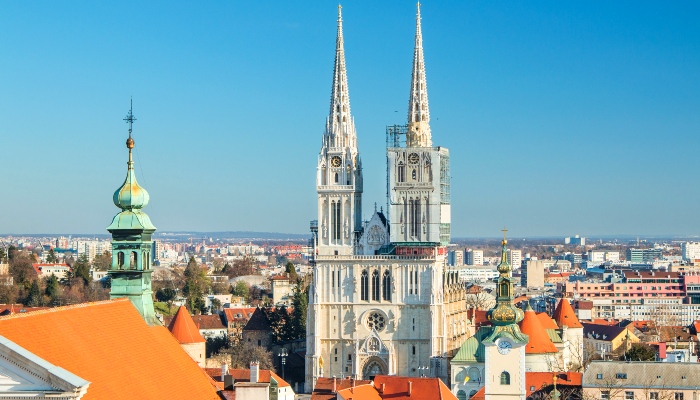
Croatia’s capital and largest city, Zagreb’s history dates back to Roman times although the name “Zagreb” was first recorded in 1134. It was once two separate towns that were united in 1851 and today there are still two distinct areas with the Lower Town home to many neo-baroque, art deco, and secessionist buildings. In the Upper Town there are narrow cobbled streets, medieval squares, homes with red-tiled rooftops, and many top tourist attractions like the Gothic Zagreb Cathedral and Stone Gate. The areas are connected by the world’s shortest and oldest funicular, while Dolac Market is at the heart of it all. The city’s largest green market, on Saturdays it’s particularly bustling, offering the chance to buy local items and mingle with residents.
Pula
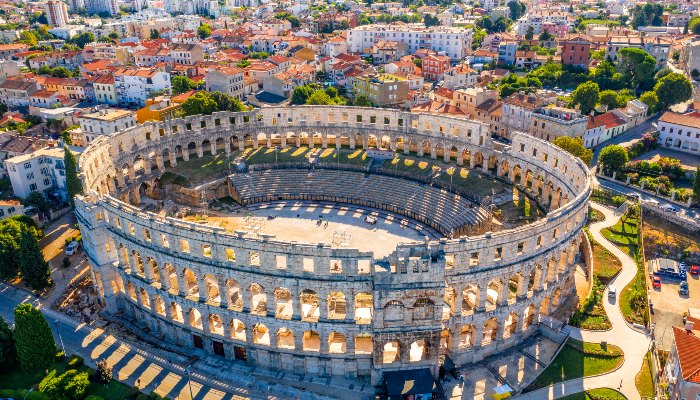
Pula sits at the southern tip of the Istria Peninsula in northern Croatia. It’s most famous for its 1st-century AD Roman amphitheater. The Pula Arena is surprisingly well preserved and the only one in the world that has retained all three Roman architectural orders and four side towers. It’s also home to the 1st century BC Roman Forum, now a piazza, and Hercules Gate, dating from the same period. Its seaside location also draws many to enjoy the picturesque beaches that range from pebble stretches to those with golden sands. The clear turquoise water is popular for swimming and a wide range of watersports, including diving, jet skiing, and water skiing. Kayaking and snorkeling can be enjoyed in some spots as well.
Rovinj
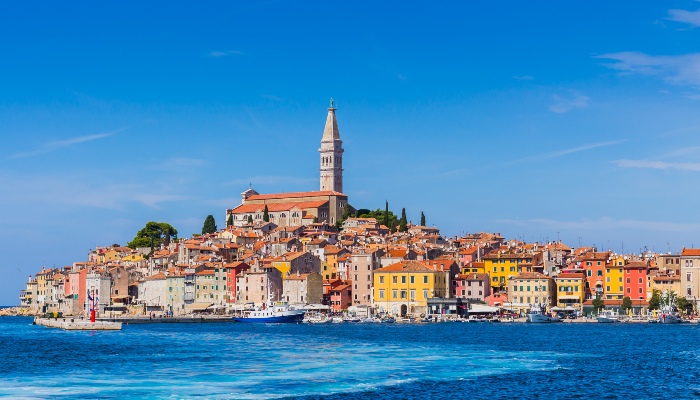
Rovinj lies along the Istria Peninsula’s west coast boasting a romantic, well-preserved Old Town with cobblestone streets and colorful homes painted in Habsburg pastels and Venetian reds. There’s significant Venetian influence throughout, making it almost feel as if you’re walking through an Italian town with bright wooden shutters and laundry hanging from balconies. The steep lanes will bring you to the most iconic symbol in the city, the Church of Saint Euphemia. Built in Baroque-style, its 200-foot-high bell tower marks the highest spot and can be climbed for a spectacular panoramic view over the town and the sea. Visit the central market, just in from the waterfront, where everything from paintings and souvenirs to fresh vegetables, honey, and olive oil are sold.
Sibenik
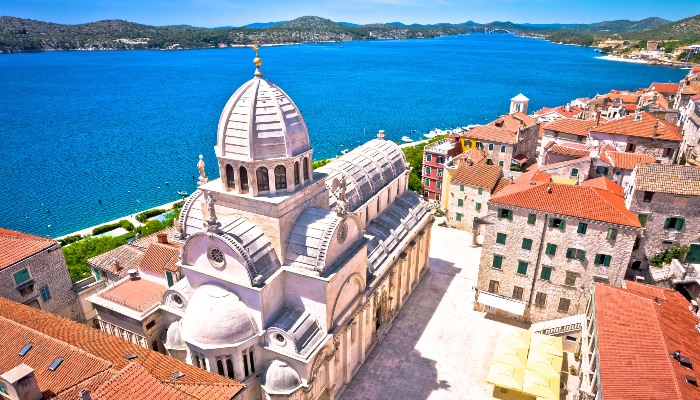
Historic Sibenik was settled by Croats around the 7th century, with the fortress they built on a hilltop roughly 200 years later still standing. St. Michael’s Fortress overlooks Sibenik Bay and the mouth of the Krka River, not only providing a beautiful view from the ramparts, but visitors can follow in the footsteps of Croatian kings to admire the architecture on a self-guided tour. The Gothic-Renaissance St. James Cathedral is another popular landmark built over the 15th and early 16th centuries using the famous stone from Brac Island, and the islands of Rab, Krk, and Korcula. It’s topped by a golden globe that stands out from afar and includes a frieze with over 70 sculpted faces of men, women, and children.
Zadar
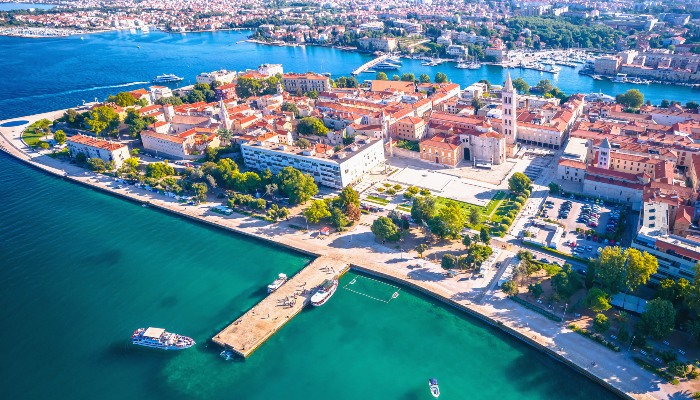
Zadar is Croatia’s oldest continuously inhabited city, with its history dating back over 3,000 years. Its past can be seen in everything from the 1st-century BC Roman Forum which sits in front of the 9th-century Church of st. Donatus to its UNESCO-listed city walls, built by the Venetians in the 16th-century. Four gates still survive, including the impressive Land GAte on Fosa Harbor, built in 1543 and decorated with sculptures like the winged lion of St. Mark. There are multiple museums worth exploring, including the Archaeological Museum showcasing artifacts from prehistoric times to the 15th century and the National Museum with modern works of art, historical sculptures and military weapons. Nearly surrounded by the sea, you’ll find many enticing beaches too.
Rijeka
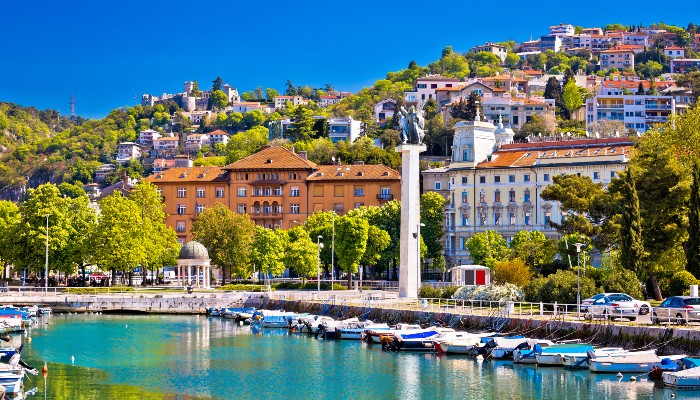
Located along Kvarner Bay in the heart of the Kvarner Gulf, Rijeka has been influenced by many different cultures having been ruled by eight countries in the 20th century. The architecture is predominantly secession-style although it also hosts magnificent neoclassical palaces. Historic landmarks include the City Tower which was its original gateway in medieval times. The 13th-century Trsat Castle soars above it all, built high on a hill on the site of an old Illyrian and Roman fortress, providing a sweeping vista of the Gulf. There are also many museums to explore, such as the Maritime and Historical Museum, set within a former 19th-century palace. It displays artifacts connected to the city’s culture and history, from prehistoric times to the 20th century.
More Inspiration
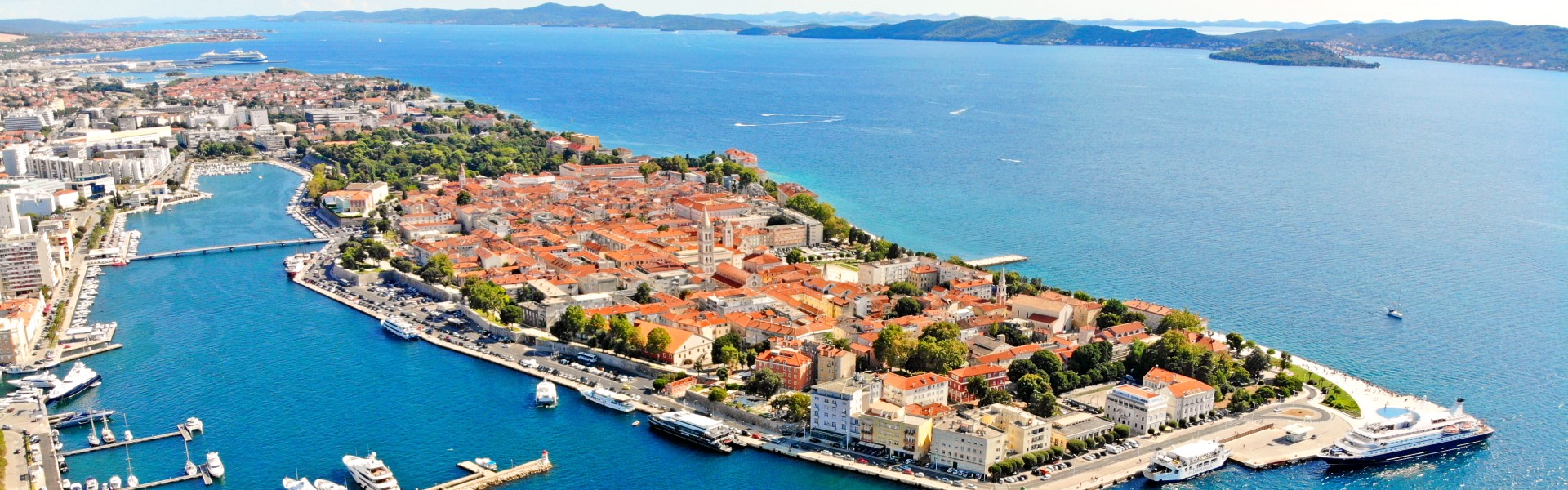
Discover Zadar: Croatia’s Oldest City

Croatia Specialist
April 03, 2025
With roots dating back over 3,000 years, Zadar is Croatia's oldest continuously inhabited city. The former capital of Dalmatia, the...
Read More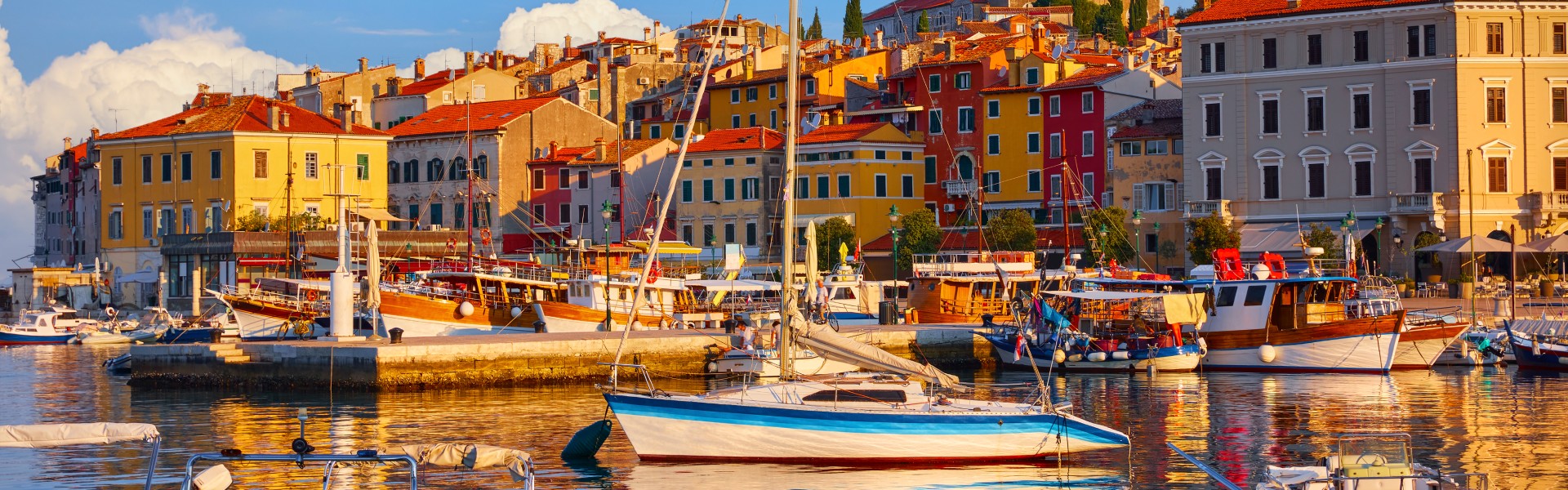
Dubrovnik vs. Rovinj: Which Croatian City Should You Visit?
Croatia Specialist
Croatia, with its stunning coastline and gem-like islands, rich history, and outstanding food and wine scene, also offers many enticing...
Read More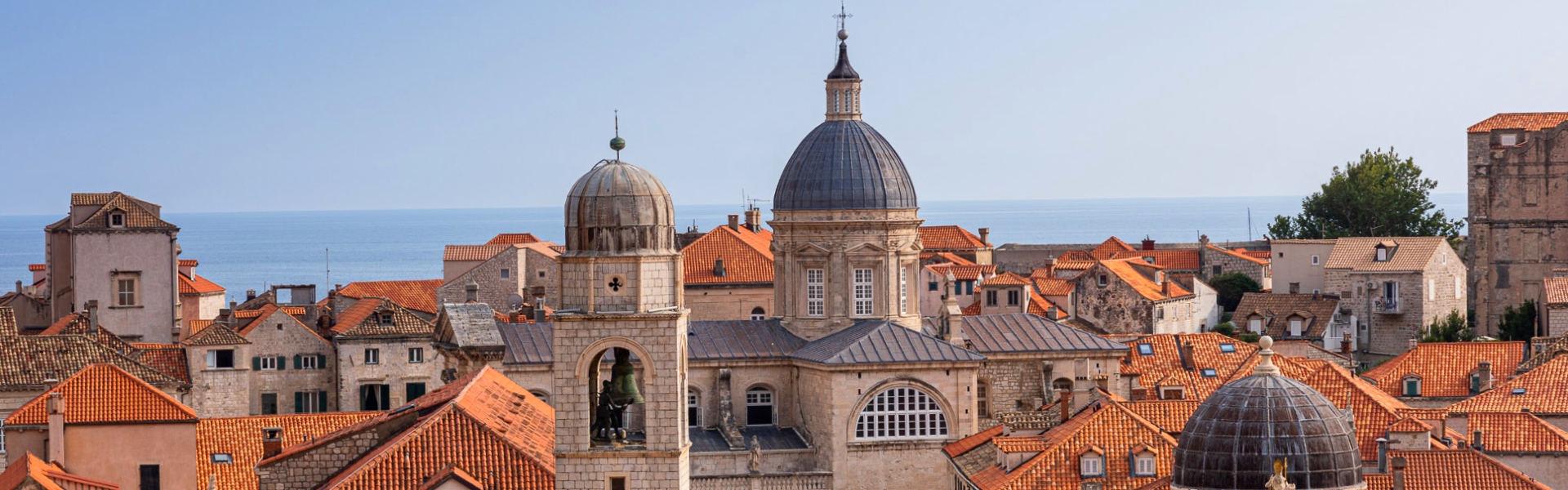
Split or Dubrovnik: Which Coastal City Should You Visit?

Croatia Specialist
The alluring European destination of Croatia has much to amaze its visitors, particularly along its coastline. With the Adriatic Sea...
Read More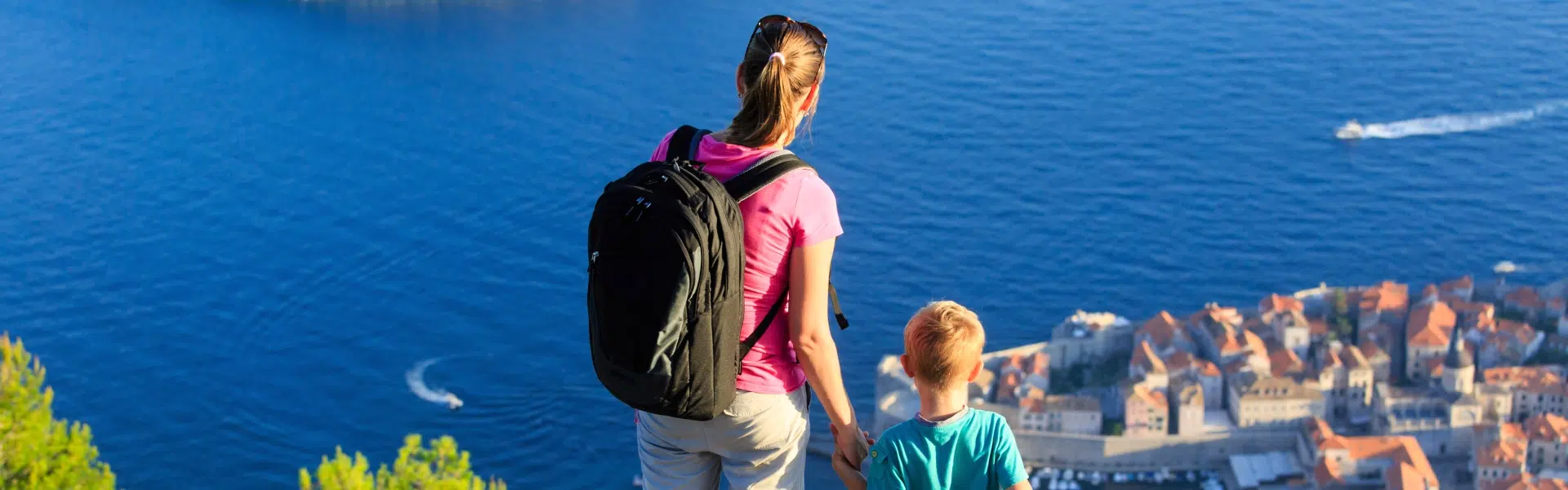
Croatia With Kids: Seven Places to Go on a Family Vacation
Croatia Specialist
From the medieval city of Dubrovnik to the mighty falls of Plitvice Valley National Park, Croatia is the perfect place...
Read More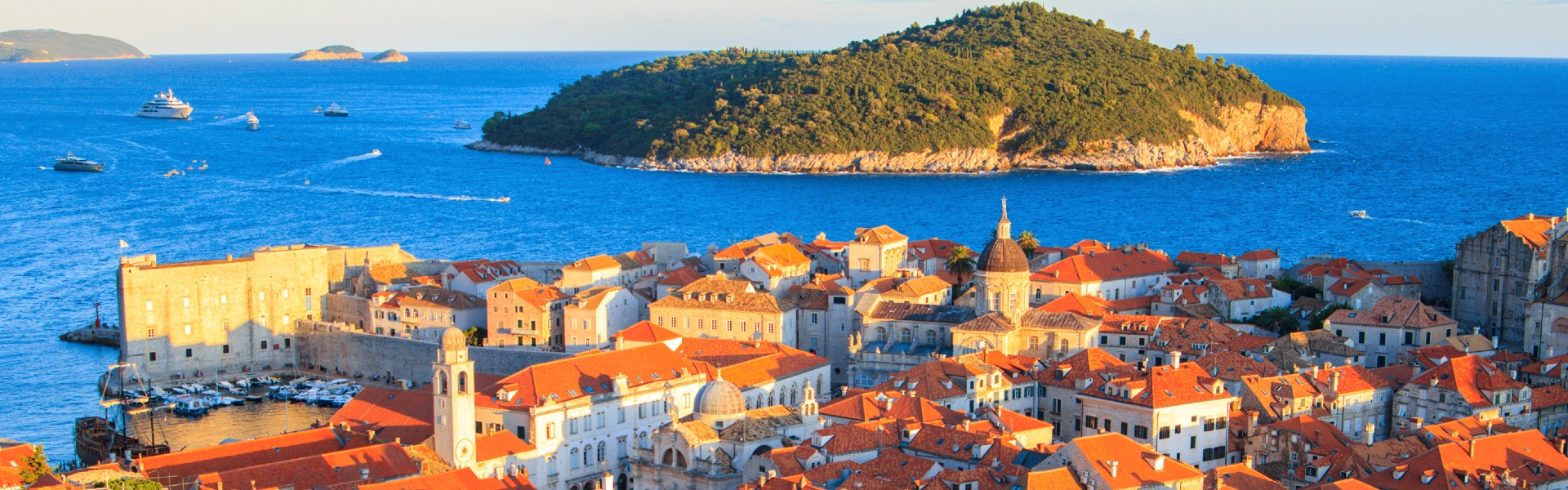
How Many Days Should You Spend in Dubrovnik?

Croatia Specialist
With so many attractions on offer, it’s only natural to wonder how many days to spend in Dubrovnik, Croatia. The...
Read More
Hvar or Dubrovnik: Which Should I Visit?

Croatia Specialist
As the sun-kissed shores of Croatia beckon travelers from around the world, one question emerges on the Adriatic horizon: Hvar...
Read More