



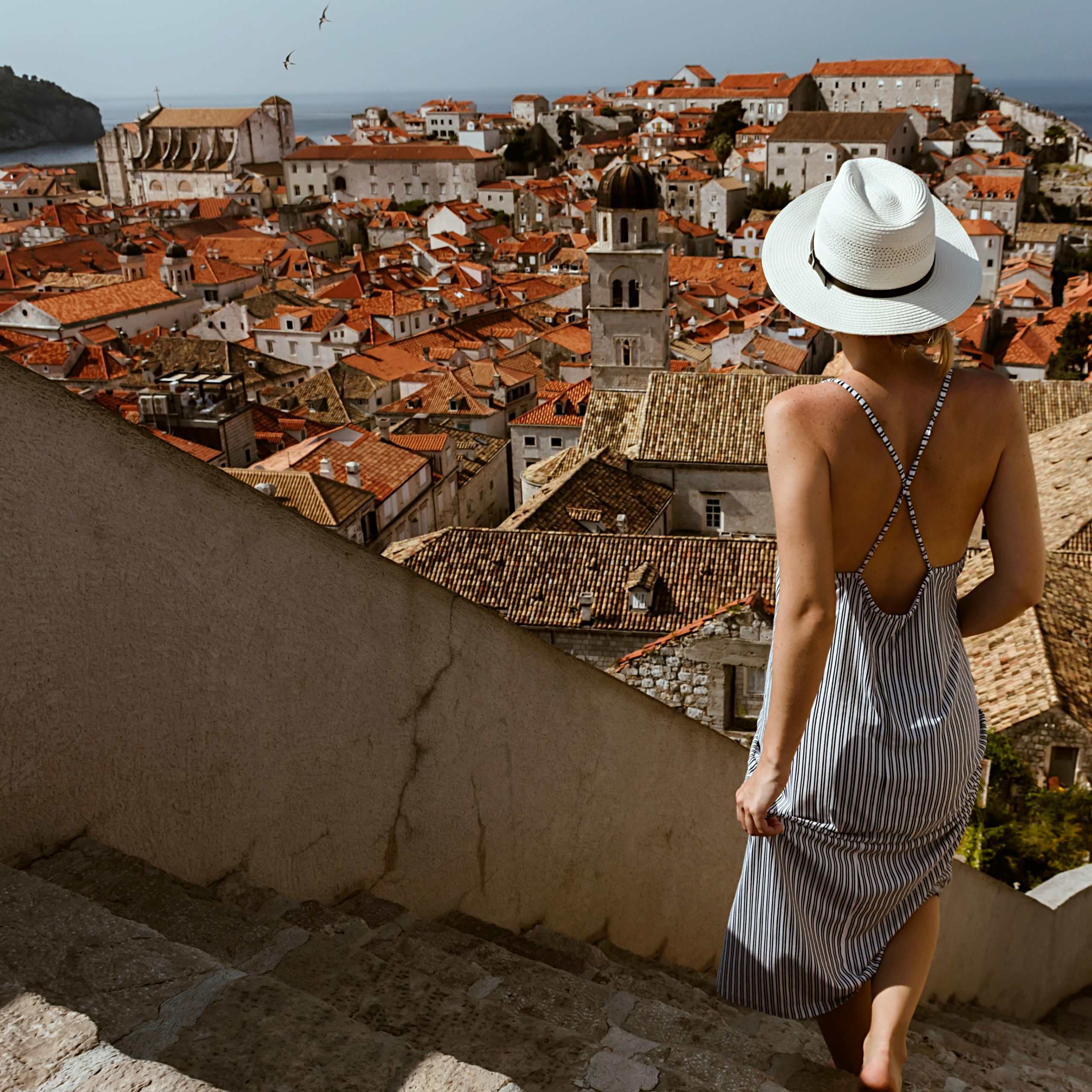
With roots dating back over 3,000 years, Zadar is Croatia’s oldest continuously inhabited city. The former capital of Dalmatia, the city is nearly surrounded by the Adriatic, located on the Zadar peninsula between Rijeka and Split. The old network of narrow streets is still here along with a Roman forum dating to the 1st century BC. But there’s an intriguing modern side, including the pair of art installations along the seafront promenade. Zadar also makes a great base for island-hopping excursions with the Kvarner Islands and the Kornati Islands both within easy reach.
Why You Should Visit Zadar
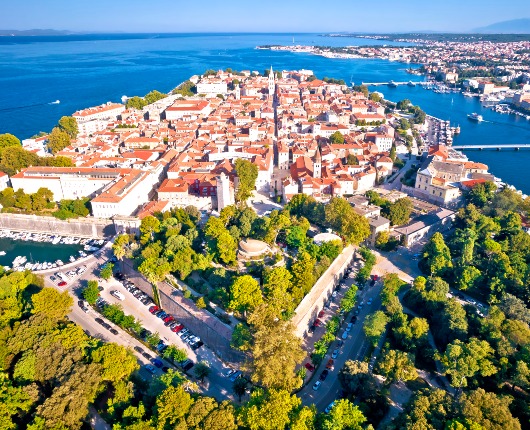
With its intriguing mix of modern and historic, Zadar should be on everyone’s must-visit list. One of the top destinations in Croatia, it boasts ancient ruins and historic landmarks, incredible art installations along the waterfront, mouthwatering cuisine, thriving nightlife, and much more. Compact and walkable, it’s easy to explore the centuries-old marble streets and simply make up your itinerary as you go, but you might want to prioritize some of the attractions with so many to choose from. There’s also plenty to discover on the gastronomic front, and options for fun after dark, including live music. If that’s not enough, you’ll have easy access to nearby islands, idyllic beaches for fun in the sun, and several national parks.
Unique Attractions in Zadar
The Sea Organ
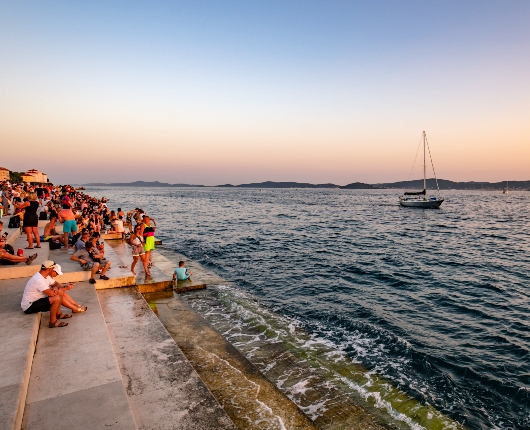
Zadar’s waterfront promenade, the Riva, is always buzzing with locals and visitors. It’s become famous for its unique art installations, including the Sea Organ carved into its marble steps. Making music using the power of the waves, the 35 organ pipes in various lengths and sizes catch the sound of the waves that enter and escape through hollowed-out holes, providing a unique soundtrack. Designed by local architect Nikola Bašić, the system of pipes and whistles exudes a wistful sigh when the movement of the sea pushes air through, creating a hypnotic effect, increasing in volume when a ferry or boat passes by. On a warm day, you can even enjoy a dip right off the promenade while enjoying its sounds.
Greeting to the Sun
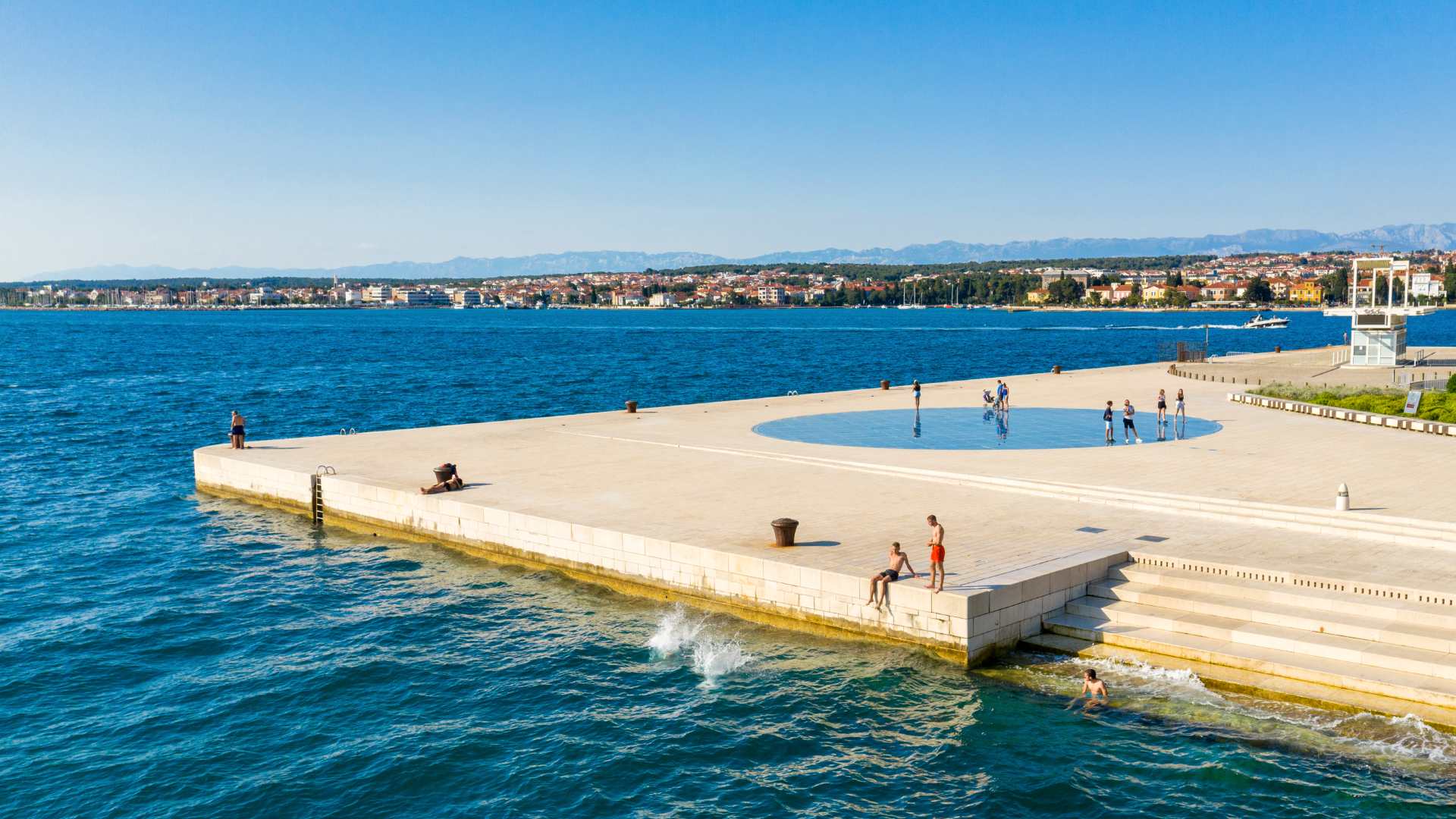
Located near the Sea Organ, the Greeting to the Sun is another impressive modern installation designed by Bašić. Shaped like a circle, it’s made up of 300 multi-layered glass solar panels that collect the sun’s energy throughout the day to convert it into electricity. That electricity is used at night to power the installation with its changing colors and shapes simulating communication with nature and the solar system in proportional figures. The spectacle is mesmerizing with each color dancing with its own rhythm. When the Sea Organ joins, it’s a show that must be seen to be believed. Plan to arrive just before dusk to enjoy the show after taking in what Alfred Hitchcock claimed to be the world’s most beautiful sunset.
Zadar’s Museums
If you want to learn more about Zadar’s past and present, you’ll find many intriguing museums to explore. The National Museum Zadar features exhibits on local history, natural history, and regional ethnology in addition to hosting a fine arts gallery. Through the glass windows of the Archaeological Museum, which contains over 100,000 artifacts from the Palaeolithic period through the 11th century AD, you can see the reflection of the remains of the Roman Forum and the early Medieval church of St Donat. At the unique Museum of Ancient Glass, there’s a fascinating archaeological collection with over 5,00 glass objects dating from the 1st century BC to the 5th century AD. Plus, the souvenir shop offers beautiful handblown glass items.
A Walk Through History: Zadar’s Old Town
Roman Ruins
With such a long and complex history, there are many traces from the past in Zadar’s Old Town, including Roman ruins. The city was a Roman colony from 48 BC until the fall of the Roman Empire in the 5th century. The aforementioned Roman Forum that was built between the 1st century BC and the 3rd century AD still remains. Located in front of the Church of St. Donatus, it’s one of Zadar’s most important and oldest landmarks. A row of shops known as tabernaeonce ran along the north and east sides and the foundations are still visible. On the west side is a column that served as the “pillar of shame” where evildoers were punished, with the chains still visible.
St. Donatus Church
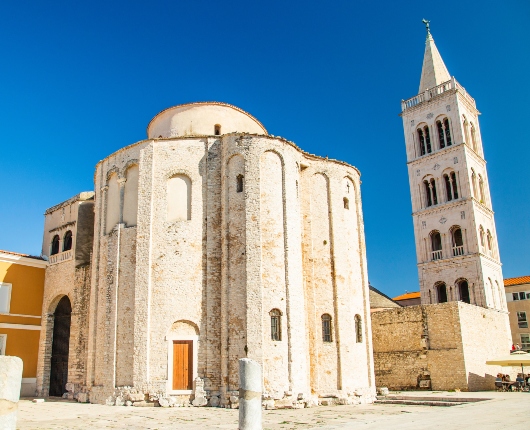
St. Donatus dates to the early 9th century, named after the bishop who commissioned it. An unusual circular-style church, it hasn’t been used services for some 200 years but it frequently serves as a concert hall, often for medieval music. The largest pre-Romanesque building in Croatia, it’s one of just a few buildings that survived the 13th-century Mongol invasion and includes two complete Roman columns inside that were recycled from the Roman Forum. Among the fragments built into the foundations, one can still see the remains of a sacrificial altar that reads IVNONI AVGUSTE IIOVI AVGUSTO. The entire structure is considered a fine architectural example from the Carolingian period and the most significant of its kind in Europe.
Zadar’s City Gates
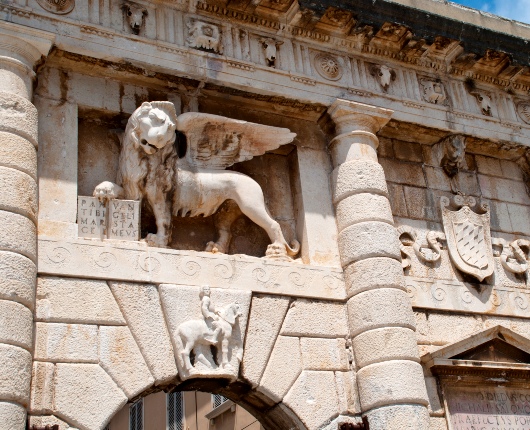
Zadar has four historic gates remaining from its 15th-century defensive walls, including the Land Gate, Sea Gate, St. Rocco Gate, and Bridge Gate. The Land Gate is the best-known, once serving as the city’s main entrance. Built by the Venetians in 1543 near Fosa harbor, it’s a prominent historical landmark with images of Zadar’s patron saint and the winged lion of St. Mark, serving as a reminder of Venice’s long rule over the city. It has a triumphal arch providing a central passageway for wheeled traffic along with two smaller side arches for pedestrians. St. Rocco connects Three Wells Square to the harbor area while the Sea Gate lies between the port and market and the neo-Renaissance Bridge Gate is near the bridge.
Key Streets & Marketplaces
Kalelarga
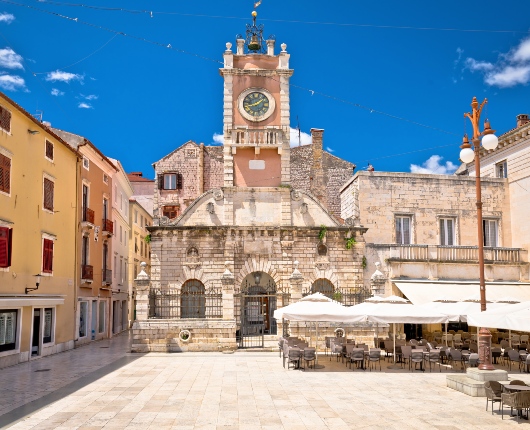
Kalelarga, or Calle Larga, is officially Široka ulica which translates to “wide street,” in the Venetian dialect once widely spoken in Zadar. No matter what you call it, it’s one of the most famous in Croatia, dating back to Roman times with its name changing several times over the centuries. Serving as the main promenade, this is one of the most popular places for a stroll while people-watching with locals gathering to hear the latest gossip. A walk here is really a must if you want to truly get the pulse of the city where its story unfolds with every step. Not to mention, there are many places to pick up souvenirs along with pastry shops, cafes, and restaurants.
Zadar Market
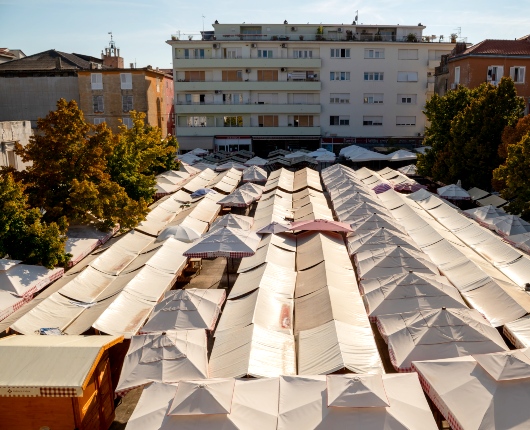
Set up in the historic center every day behind St Chrysogonus Church adjacent to the old city walls, Zadar Market is the most popular market in the city, offering a wide range of fresh fruits and vegetables from nearby farms, cured hams, cheeses from Pag Island, home-pressed extra-virgin olive oil, homemade honey, wine, Maraska (the city’s signature cherry-flavored liqueur), and rakija, a popular Croatian fruit brandy flavored with walnuts, honey, or anise. There is also a wide range of handcrafted items and a fish section with seafood supplied fresh from the Adriatic every morning. As most of the vendors enjoy chatting with travelers, it’s a great way to mingle with the locals and perhaps get some insider tips too.
Local Cuisine: A Taste of Zadar
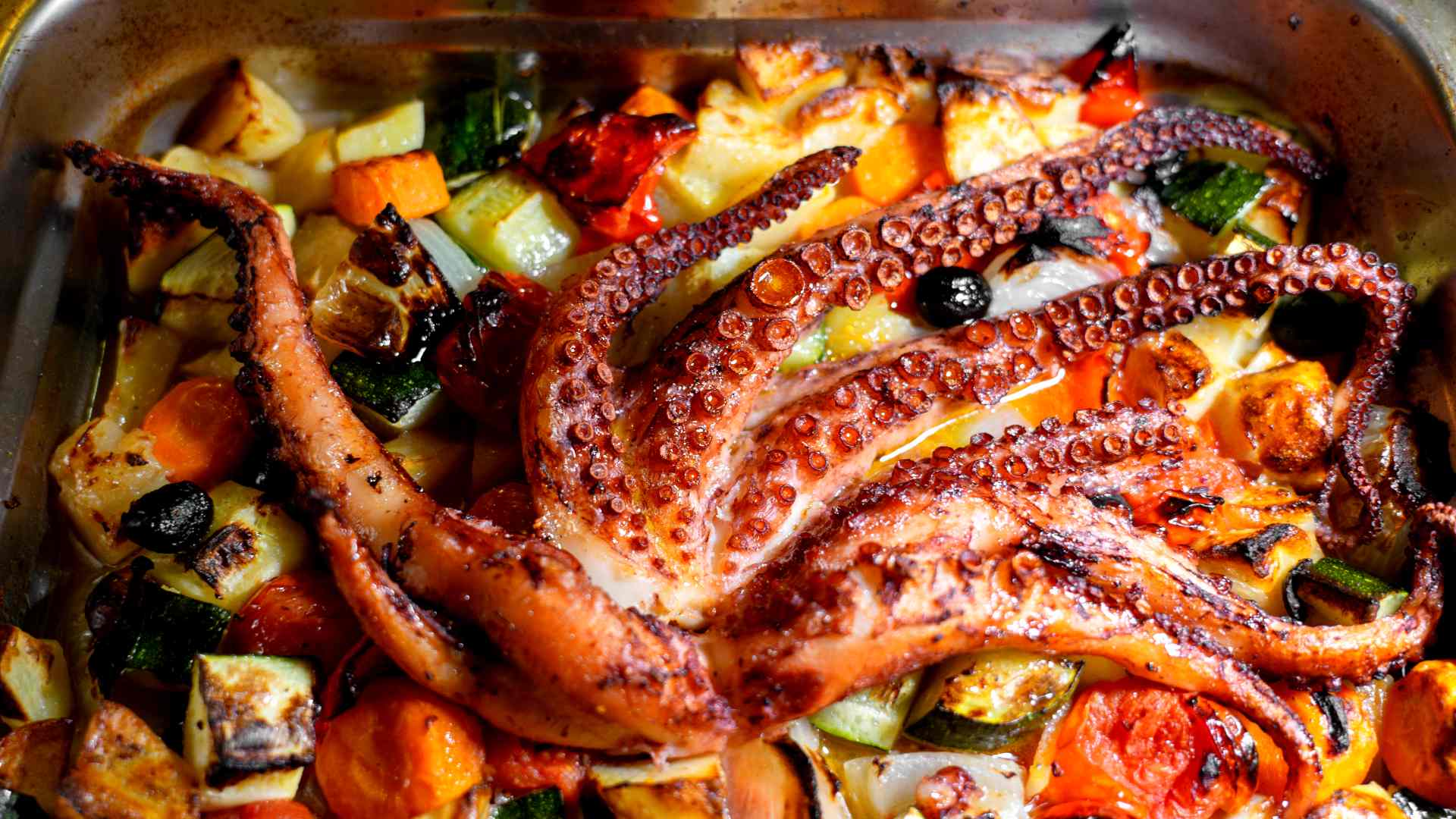
Zadar’s traditional local cuisine incorporates products and traditional cooking from the Dalmatian region with some Mediterranean influences. It’s based on simple products from the sea and land. Here on the coast, fish and seafood are common, particularly mussels which are quite popular and often prepared with white wine, parsley, and garlic. Shrimp and lobster are often cooked in a dish with tomato sauce, olive oil, wine, garlic, fresh herbs, and breadcrumbs. Meat dishes are featured too in peka, a baked dish similar to a stew with lamb or chicken and potatoes. Vegetables from local farms or even grown in the wild like asparagus are popular side dishes. Pag Island cheese and Dalmatian prosciutto are two of the must-tries, commonly available in the markets.
Day Trips from Zadar
National Parks
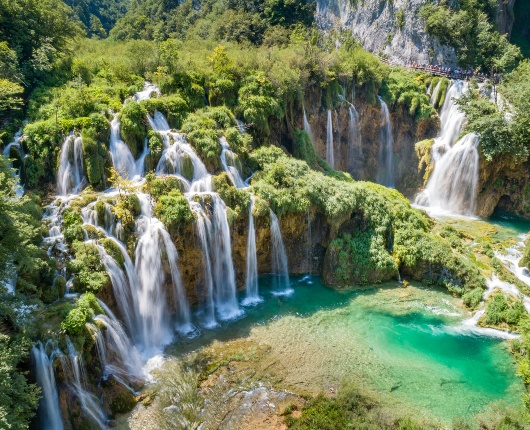
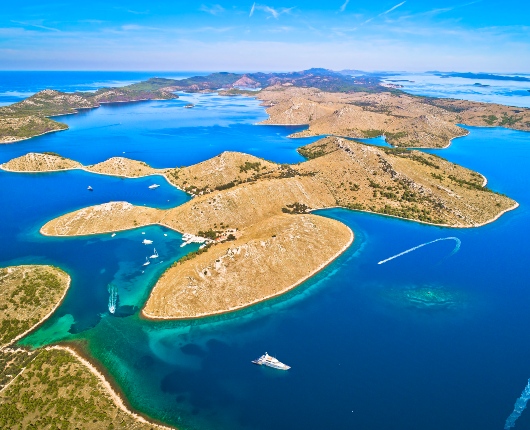
Croatia is home to eight national parks, four of which are within easy reach of Zadar for a day trip. Plitvice Lakes National Park is just a 90-minute drive away and has become one of the country’s most iconic symbols with its stunning lakes in brilliant shades of blues and greens while nearly 100 waterfalls are laced in between, including the country’s highest at 256 feet. Krka National Park is only an hour’s drive located near historic Sibenik. It’s home to Croatia’s longest river, multiple lakes, and seven breathtaking travertine waterfalls. Kornati National Park south of Zadar includes 80 islands, islets, and reefs ideal for sailing excursions while Paklenica National Park is a hiker’s paradise with spectacular gorges and dramatic peaks.
Island Hopping
Beyond Kornati and its islands, visitors can enjoy island-hopping excursions in the Kvarner Islands, tucked in the Adriatic’s northwest corner. The Kvarner Gulf is home to over 100 gem-like islands that can be reached by ferry, yacht charter, or on a small-ship cruise. They offer idyllic beaches with turquoise water for sunbathing, swimming, and more. You’ll also find scenic trails to hike, historic attractions, and mouthwatering cuisine. Some of the favorites include Krk, Cres, Rab, and Losinj, each of which offers its own unique delights while boasting breathtaking natural beauty. Krk is the largest, slightly bigger than unspoiled Cres, offering many beautiful beaches and opportunities for watersports. It also has a medieval fortress and one of Croatia’s oldest churches, 5th-century Krk Cathedral.
Best Time to Visit
Zadar enjoys pleasant weather for exploring from April through mid-October. Spring delivers colorful flowers to the city’s parks and green spaces and while April is cooler, with highs in the low 60s, by May the mercury rises to around 70, ideal for sightseeing and avoiding summer’s thick crowds. Summer is the warmest and busiest season with average highs at 86 degrees, but it’s ideal for swimming and attending lively festivals like July’s International Folklore Festival. Mid-September through mid-October sees thinner crowds, temperatures in the 60s to mid-70s, and fall color with oranges, golds, and reds splashed across the landscapes. November through March is the off-season, but it offers plenty, including the chance to enjoy one of Europe’s best Christmas markets in December.
More Inspiration

A Foodie Experience in Croatia

Croatia Specialist
Europe is often praised for its exquisite food and wine scene. Spain and Portugal boast delicious wineries and global wine...
Read More
Croatia’s Best Swimming Spots
Croatia Specialist
If you like to swim, a Croatia vacation during the warmer months of the year is sure to please. With...
Read More
How to Choose the Best Honeymoon Cruise in Croatia for Your Budget and Preferences

Croatia Specialist
Your honeymoon is one of the most special moments of your life, as you celebrate your love and new life...
Read More
One Week in Croatia – What to Do & Where to Go

Croatia Specialist
We believe Croatia to be a complete destination, offering fine food and drink, fascinating culture, intriguing history and historic sites,...
Read More
Croatia’s Michelin-Starred Restaurants Revealed
Croatia Specialist
On a Croatia private tour, you can admire everything from idyllic beaches and brilliant turquoise water to magnificent medieval landmarks,...
Read More
The Expert Guide to Dubrovnik

Travel Journalist
Steeped in history with supermodel looks, Dubrovnik’s story is an extraordinary tale of wealth and opulence, wars and occupation and...
Read More