



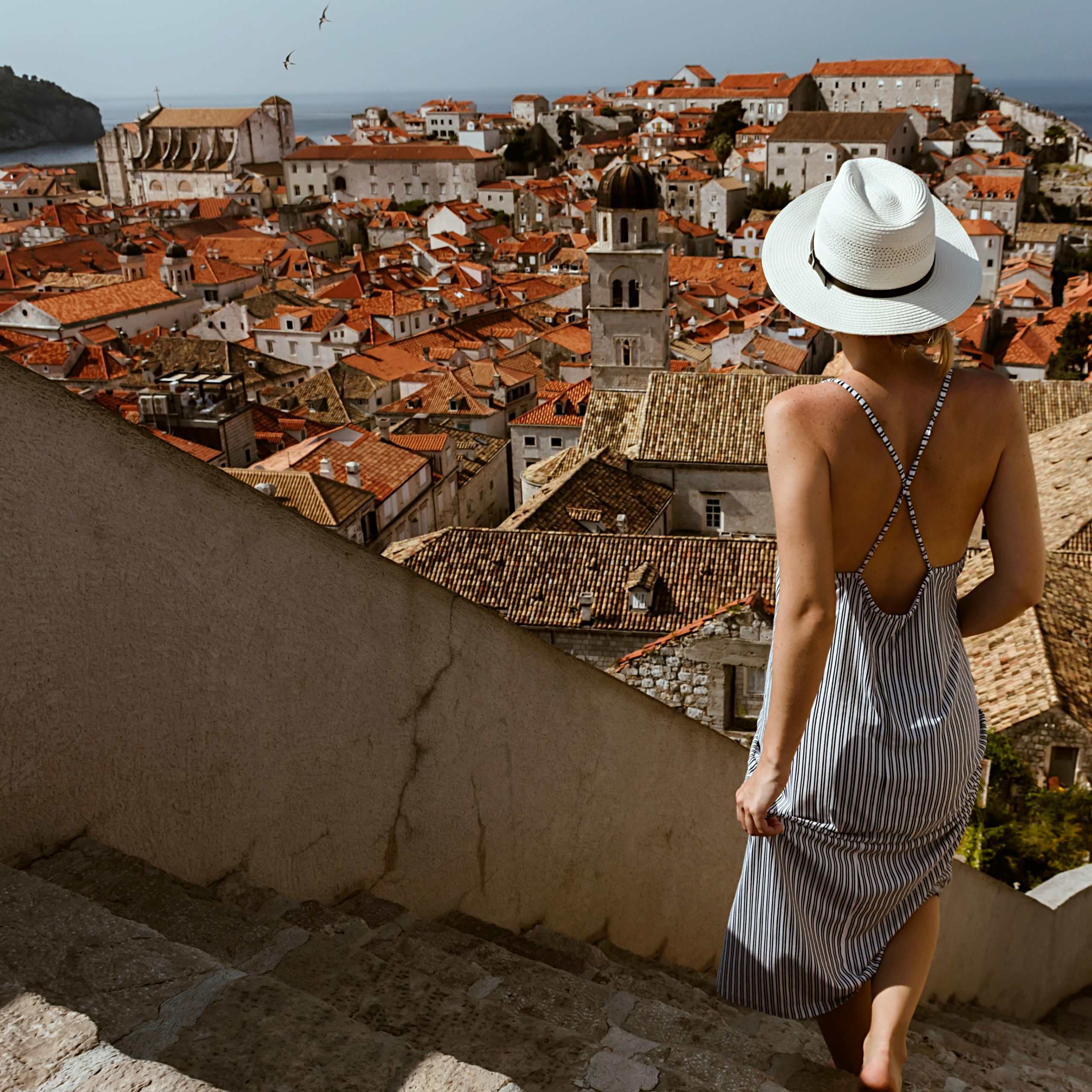

Sun-soaked Split is Croatia’s second-largest city, a lively, boisterous place that somehow manages to combines the bustle of a major port with the relaxed attitude of the Dalmatian coast. Some visitors know it purely as the jumping-off point for ferry trips to Dalmatia’s islands, but there’s so much more to Split than that. It’s not often you find a major city that sprouted from the ruins of a 3rd/4th-century Roman palace, but that’s what’s at the heart of Split’s Old Town. However, Diocletian’s Palace and other ancient Roman landmarks are only part of the story.
This is a city where much of life is lived outdoors, starting in the Riva, the palm-lined waterfront promenade filled with café and restaurant terraces. A morning coffee here, combined with people-watching, is one of my favorite ways to start the day. From here you get views of Split’s port; walk along the west bank to reach the marinas, while the east bank is filled with ferries, catamarans, pleasure craft and cruise ships of all sizes. Now dive into the maze of medieval lanes west of Diocletian’s Palace, veering in and out of attractive squares such as Narodni Trg (People’s Square) and Voćni Trg (Fruit Square). Soon you come to the elegant expanse of Trg Republike (Republic Square), which was built during the Austrian rule to resemble St Mark’s Square in Venice and does a rather impressive job of it.
Flanking the Old Town are two of Split’s oldest neighborhoods. To the east is Radunica, a warren of narrow lanes filled with stone houses, many of which are rented as private accommodation. West of the Old Town is the old fishermen’s quarter of Varoš, one of Split’s buzziest neighborhoods. While Radunica is more residential, Varoš is where you’ll find a growing number of trendy bars and restaurants as well as privately rented apartments and houses.
When to Visit Split
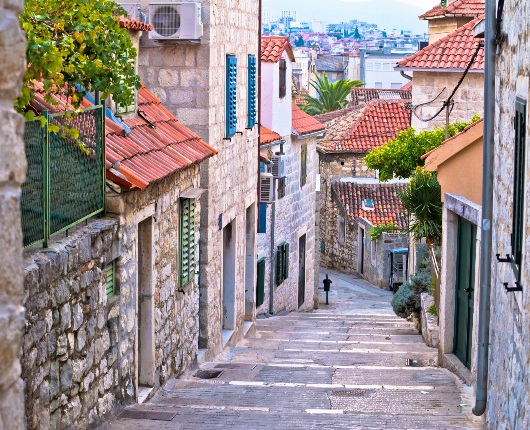
Split is pretty much an all-year-round destination, although some restaurants and bars close in the winter once the Christmas market packs up. July and August are the hottest and most hectic months—the port will be full of vacationers taking ferries and joining cruises. April to June and September to October are prime times to visit: the temperature will be pleasant, and if you visit in the fall, the sea will still be warm.
How Long to Spend in Split
Even if you’re using Split only as the launchpad to the islands, you’d still want to spend at least a couple of days here. If you want to use Split as a base for day trips, then about four days should give you enough of a flavor.
What to Do in Split
Split’s Top Sites
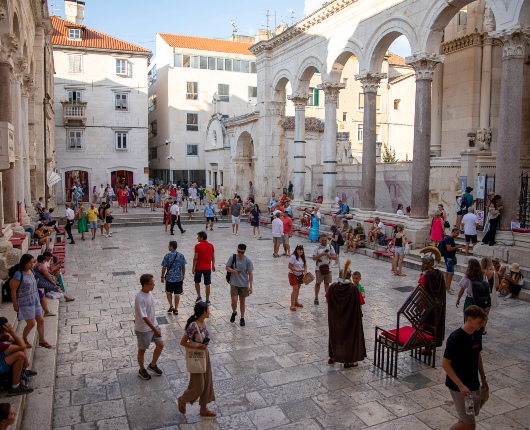
Diocletian’s Palace
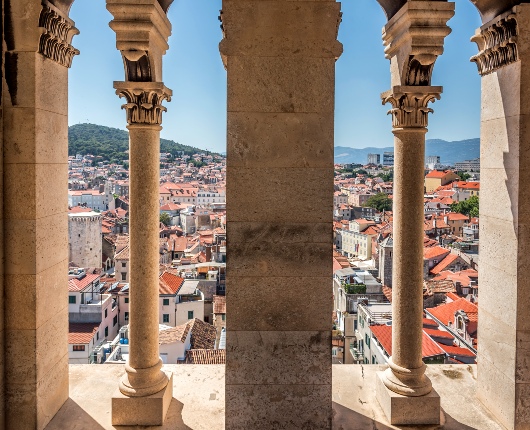
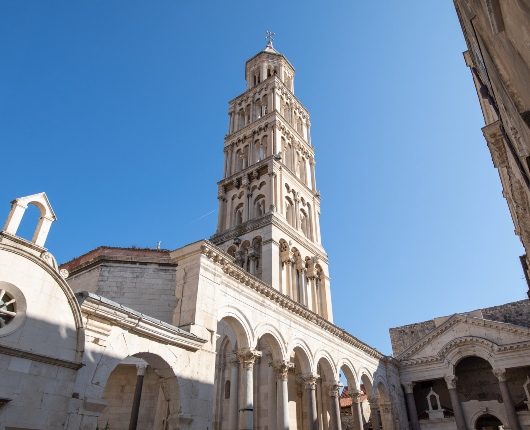
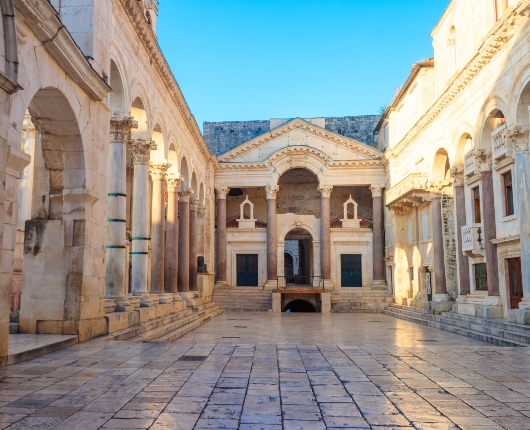
You might not realize you’re in the midst of Diocletian’s Palace until you notice you’re surrounded by graceful marble columns and stone arches. The Roman emperor Diocletian had the palace built as his retirement home around the turn of the 3rd/4th century AD, although it was as much a fortress as it was a residence (not surprising, given the relatively short life span of a Roman emperor). Sometime after Diocletian’s death in AD 312, the palace fell into disuse, and eventually was taken over by the local population. Residents used existing materials to build their own dwellings within the palace, giving it its current look of a living ruin. Shops, cafés, restaurants and apartments are all tucked into various corners of the old palace, and its original courtyard, the Peristyle, is an atmospheric venue for summertime classical concerts, and even features an ancient Egyptian sphinx picked up by Diocletian to furnish his new home. What was his mausoleum is now the Cathedral of St Domnius, a magnificent octagonal building with an equally fascinating interior.
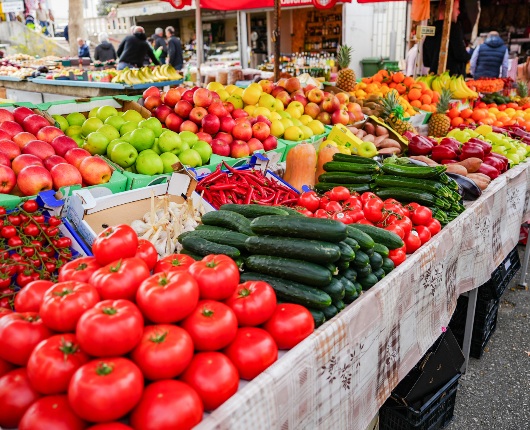
Beside the palace’s eastern gate is Split’s farmers’ market, which is open every morning. For an idea of what will end up on your plate, walk to the large covered fish market beside Trg Republike for an authentic taste of the Mediterranean.
Croatia’s finest sculptor, Ivan Meštrović, whose many works include the monumental statue of Gregory of Nin at the northern gate of Diocletian’s Palace, built a lavish summer villa in the 1930s which is now the Meštrović Gallery. Set under Marjan hill on the peninsula west of Varoš, this vast villa has superb views of the sea—not that they detract from the compelling art both inside the villa and around its gardens. Walk another few minutes closer to the sea to see more of Meštrović’s works in Crkvine-Kaštilac, part of a restored 16th -century estate.
Diocletian was believed to have been born just outside Split in Salona, the former capital of Roman Dalmatia and which has since been supplanted by the modern suburb of Solin. Easily reached by bus from the city center, the ruins of Salona sprawl across an area that once would have contained 60,000 people. Only about 15 percent of the ruins have been excavated, but there’s still much to see, including a large 2nd -century amphitheater, the Manastirine necropolis and a 5th -century basilica. There’s also Tusculum, the 1898 summer villa built for the archeologist Don Frane Bulić, which is now a small museum and looks out over pretty landscaped gardens. The whole complex is a pleasant place to wander around, and is popular for picnics.
Game of Thrones
People arriving in Split’s port are usually greeted by tour guides offering visits to the “Game of Thrones Fortress”. For those who have never seen the HBO TV series, they’re talking about Klis Fortress, a hulking medieval fortress north of Split which doubled as Meereen for the series. It’s worth the 25-minute drive to take in the superb views from the fortifications. Although the exhibits can be a bit underwhelming, the fortress’s location cut into limestone cliffs makes it such an impressive sight.
Outdoor Activities
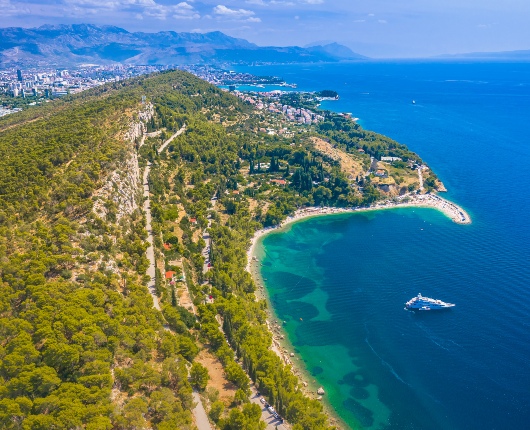
Marjan hill is where everyone in Split goes to get their fix of greenery, whether hiking, cycling or just strolling. Footpaths wind their way across this large forested hill, whose peak, 578-ft. Telegrin, has some of the best views of Split and the islands. Follow the wooded trails that lead to Bene Bay on the northern side, an appealing place for a swim.
Split’s rocky coastline, especially around Marjan, lends itself perfectly to sea kayaking. Tours usually start at the port and make their way around the peninsula, giving you the chance to stop for a swim.
Split’s Beaches
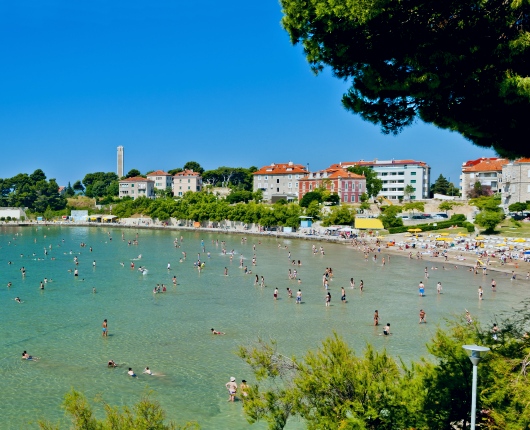
Split’s main city beach, Bačvice, is a lively spot just east of the port and is a favorite with locals and visitors. Unlike the majority of Croatian beaches, which are pebbly or rocky, this one is made of sand, which makes it easier to play the beach ball game called picigin, which originated here. Its neighbors to the east, Ovčice and Firule, are more family focused. Further east is one of Split’s biggest beaches, Žnjan, which is currently undergoing extensive renovation works.
If you’re visiting the Meštrović Gallery, you’ll be right by two neighboring pebbly beaches, Ježinac and Kaštelet. Carry on further west to the sheltered and quieter shingle beach of Kasjuni, or try Bene and Treća Voda on the northern side of the peninsula.
Day Trips & Nearby Islands
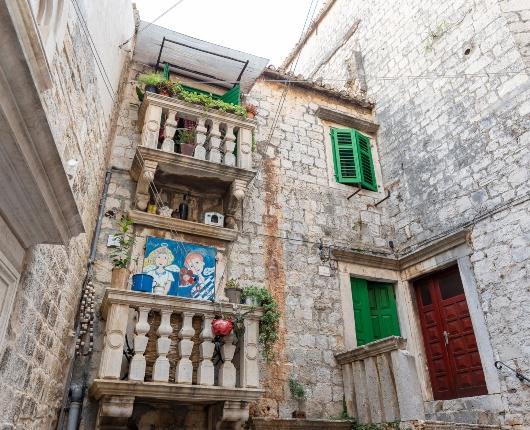
Closer to Split airport than Split itself, Trogir is a jewel, a Unesco-listed medieval town on its own island wedged between the mainland and the larger island of Čiovo. Its narrow Venetian lanes lead you to the handsome square dominated by the 13th -century Cathedral of St Lawrence, whose 15th -century belltower is worth climbing for its views.
Follow the coastal road for about 40 minutes east and you reach Omiš, once a pirate stronghold, whose geographical position is surely one of Croatia’s most dramatic. Sliced in half by the scrubby limestone Cetina River canyon, it features a bijou Venetian old town down below and some challenging hiking trails into those forbidding mountains. Get your thrills by flying across the canyon on a zipwire, or join one of many kayaking and rafting tours on the Cetina River.
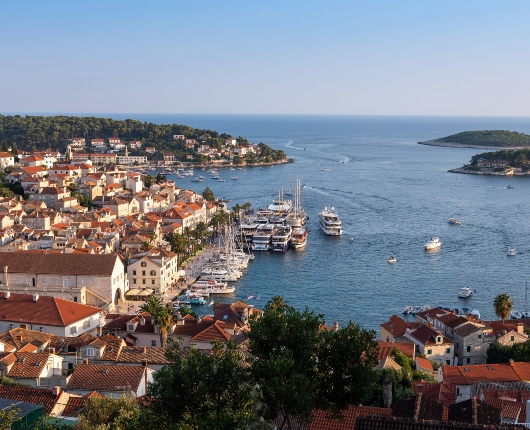
Hvar, Croatia’s most visited island, attracts partygoers to the beach clubs of Hvar Town, but there’s much more to see away from the crowds. It is certainly worth strolling along Hvar Town’s Venetian streets and taking a walk up to the Spanish Fortress overlooking the town. Stari Grad is much quieter and more laid-back but just as attractive, as are the charming fishing villages of Jelsa and Vrboska a short drive from Stari Grad.
The largest island in Dalmatia, Brač is home to Croatia’s most distinctive beach, the pebbly V-shaped Zlatni Rat that dangles off the southern coast and changes shape with the tides. Direct ferries will take you to nearby Bol, from where you can join hiking excursions up to Vidova Gora, the island’s highest peak at 2,560ft., for panoramic views.
Šolta, the island closest to Split, is curiously overlooked as everyone else heads to Brač or Hvar. But if you have time for a day trip, ferries from Split go to the village of Rogač, where you can swim and dine in one of the waterside restaurants.
Read More
Where to Stay
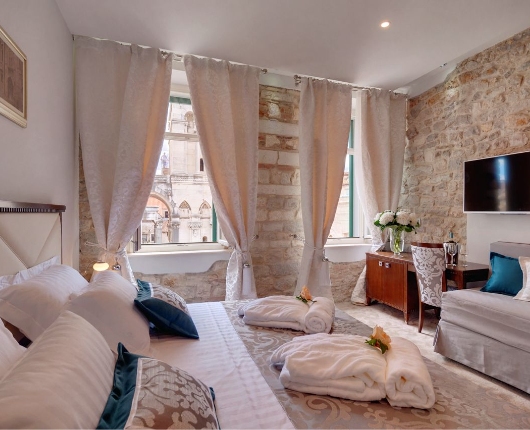
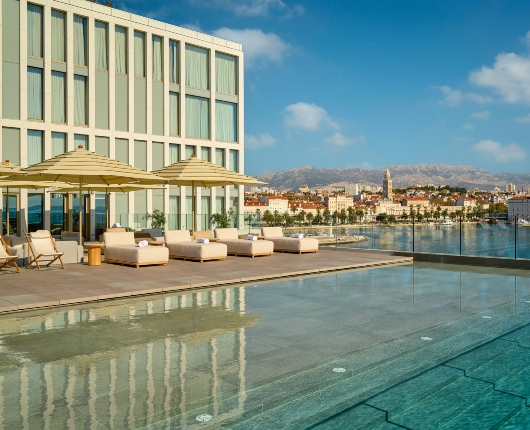
If you want to stay in the heart of Split’s Old Town, you’ll have a good selection of boutique heritage hotels squeezed within the walls of Diocletian’s Palace. But there are equally attractive hotels both east and west of the port.
A member of the Small Luxury Hotels of the World and Split’s first boutique hotel, Hotel Vestibul Palace set inside Diocletian’s features chic contemporary rooms warmed by stone walls and ancient Roman brickwork. On the other side of the Peristyle is Heritage Hotel Antique Split, whose front rooms have lovely views of the cathedral and Peristyle.
Minutes away from Diocletian’s Palace is the modern Hotel Cornaro—handy for the Old Town but which features a rooftop pool. One of Split’s newer additions is the Hotel Ambasador, a glossy white tower of a hotel west of the Riva with a pool terrace and fabulous views.
If you want to be closer to the ferry port, check out Hotel Luxe east of the farmers’ market, which offers sophisticated room and great views of the harbor. Overlooking Bačvice Beach are two stylish options: Hotel Park in a handsome 1920s townhouse with a large pool terrace, and ultramodern Briig Boutique Hotel, a giant gleaming white cube with a rooftop pool.
Food & Drink
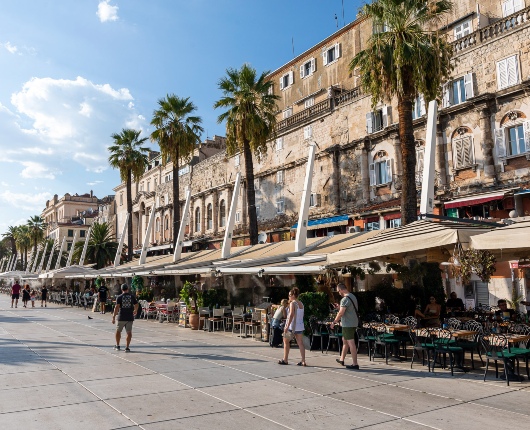
Cuisine
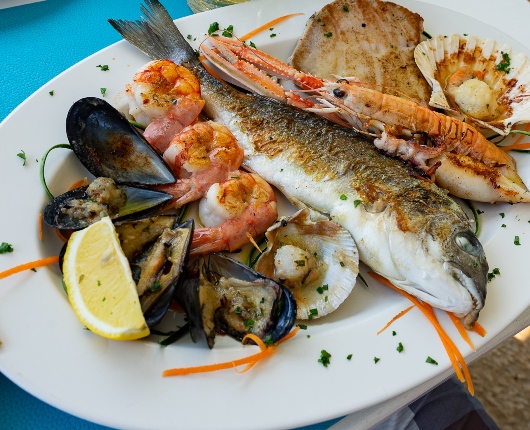
Here in Dalmatia, the focus is firmly on Mediterranean ingredients and flavors. That means plenty of fish and seafood, along with grilled meats, pastas and risottos. One dish you’re certain to see on many menus is the typically Dalmatian dish of pašticada, deliciously rich, slow-cooked beef usually serviced with gnocchi. Another is cuttlefish risotto, a popular Adriatic dish. Try some of Dalmatia’s best wines here too, including full-bodied red plavac mali and crisp white pošip.
Where to Eat
The intimate courtyard setting is as appealing as the creative and seasonal menu at Makarun, which is a few seconds away from Diocletian’s Palace. Choose from seafood-heavy dishes (such as the daily catch, lobster and various seafood pastas), meaty options (including steak with black truffle) and a few innovative vegan choices. It is worth noting that in the height of summer the restaurant gets hot and humid as it is situated between buildings, meaning there is no airflow.
A few minutes’ walk from Narodni Trg is the large, cheerful and very stylish Bokeria Kitchen & Wine Bar, which does everything from breakfast and small plates to generously sized pasta, seafood and meat dishes.
Trendy Varoš still has plenty of pleasingly traditional restaurants, known as konoba. A classic place is Konoba Varoš, which serves grilled meats and seafood along with dishes of veal, lamb or octopus cooked slowly in embers for hours under a bell-shaped iron pot called a peka. The resulting meat is succulent beyond belief, but you need to give several hours’ notice.
Also in Varoš is Trattoria Tinel, which has a lovely secluded courtyard garden where you can enjoy traditional Dalmatian grilled meats, fish and pasta.
The same people who own Bokeria also run Bokamorra west of the port, a funky pizzeria that describes itself as serving haute couture pizza and cocktails. That’s all they serve, and they do it brilliantly.
Where to Drink
Cool and cozy at the same time, The Daltonist just east of Diocletian’s Palace serves excellent cocktails and craft beer—plus brunch and snacks—in a warm interior with exposed stone walls.
Tucked within Diocletian’s Palace is Marvlvs Library Jazz Bar, a laid-back stone-walled spot where you can listen to live music while sampling cocktails and Dalmatian wines.
Put yourself in the hands of master mixers at Bar Sistema on the northern edge of the Old Town, a classy bar where a lot of thought has gone into the creation of their cocktails.
Seconds away from Trg Republike is Fabrique Pub and its fun, eclectic interior under stone vaulted ceilings and a lively covered terrace. It calls itself a pub, but there are also hefty plates of grilled meats you can order to go with your drinks.
Top Split Travel Tips
- To get the most out of a visit to the underground chambers of Diocletian’s Palace, join a tour or hire an accredited tour guide; you’ll hear fascinating stories and invaluable background information.
- When visiting the other islands, you can book your tickets online in advance. Ferry companies include Jadrolinija (for car ferries and foot-passenger catamarans) and Krilo (catamarans only).
- The Ultra Europe dance music festival around the second weekend of July brings in the crowds, puts pressure on accommodation, and ratchets up the city’s party atmosphere.
More Inspiration
Split or Dubrovnik: Which Coastal City Should You Visit?

Croatia Specialist
The alluring European destination of Croatia has much to amaze its visitors, particularly along its coastline. With the Adriatic Sea...
Read More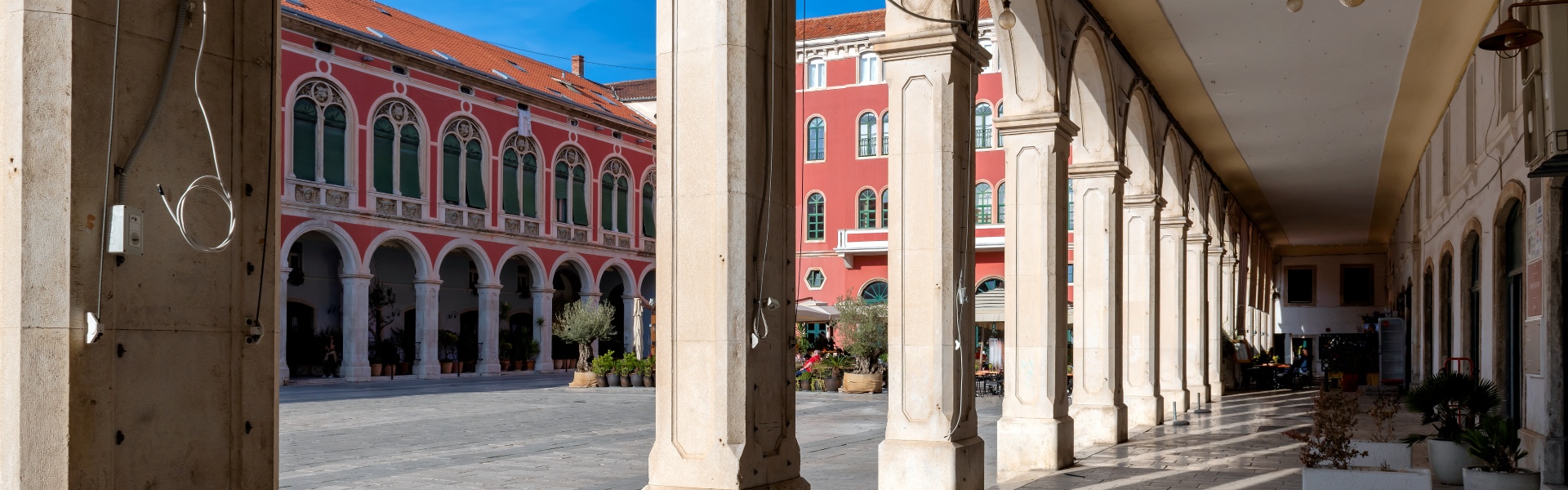
The 10 Best Things to Do in Split

Croatia Specialist
Rooted in its ancient Greek origins, Split derives its name from a local shrub, reflecting its humble beginnings as a...
Read More
The Best Day Trips from Split
Croatia Specialist
Split is one of Croatia's crown jewels, famous for its Roman Emperor Diocletian's Palace and a rich past dating back...
Read More
Zagreb or Split: Which is Better?
Croatia Specialist
While planning a Croatian vacation, you may find yourself pondering over the age-old question: Split or Zagreb? Both cities offer...
Read More
Best Hidden Gems in Croatia
Croatia Specialist
Croatia has become one of the hottest travel destinations in the world with its endless miles of beautiful coastline, hundreds...
Read More
Destinations to Combine with Croatia
Croatia Specialist
Croatia boasts a spectacular location along the Adriatic Sea, brimming with historic cities like Split and Dubrovnik, charming fishing villages,...
Read More