



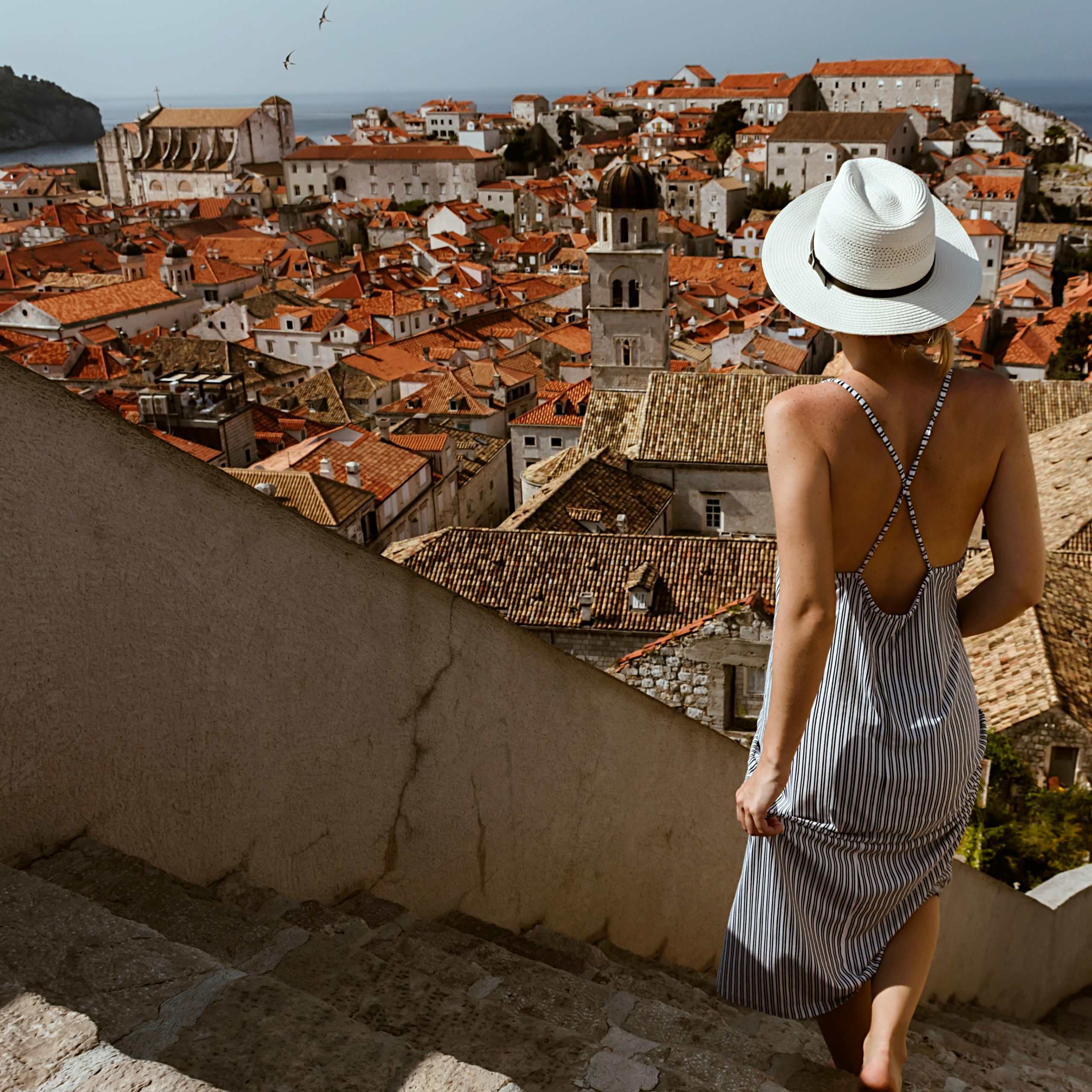

In Croatia’s glittering archipelago of 1,244 islands, Hvar stands head and shoulders above the rest; an idyllic mix of perfectly-preserved Venetian old towns, swathes of purple-hued lavender fields and crystalline seas that demand to be swum in, sailed on or lazed by for days on end. In the summer months, wealthy Croats drift across from the mainland on their yachts, while celebs and Europe’s prettiest party people swoop in to drink cocktails chic nightclubs, and whirl between the Pakleni islands in gleaming speedboats.
And yet somehow, Hvar remains true to itself, with plenty of quieter villages and unspoilt countryside to explore away from the bright lights of Hvar Town. Stari Grad and Jelsa both have the same Venetian architecture and picturesque streets but are less busy, particularly in the evenings, while up in the hills clusters of old stone houses form sleepy hamlets and villages, surrounded by olive groves and lavender fields, that feel almost entirely untouched by tourism. Come for the glamor and glittering seas, but don’t miss Hvar’s quieter side, where the island’s natural beauty is at its best.
When to Visit Hvar
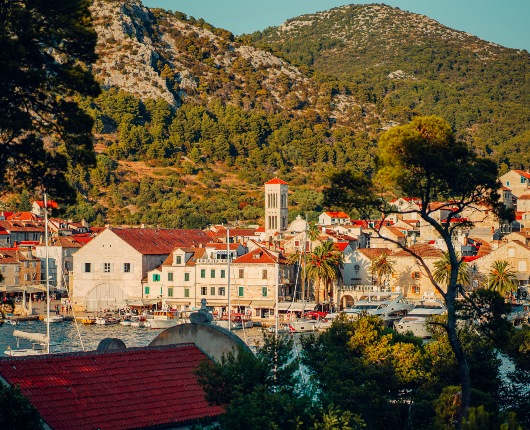
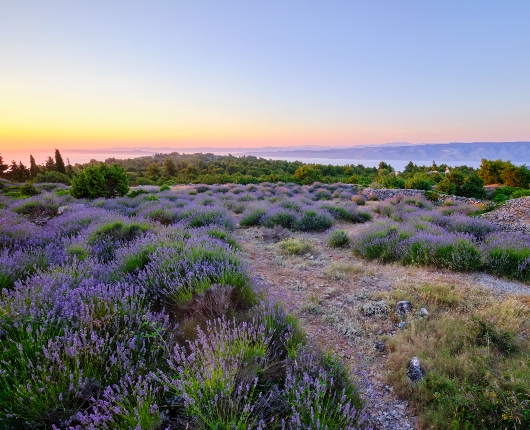
Unless you want to be plunged into a world of weeks-ahead dinner reservations and cocktail queues, avoid August – and July, if possible. The shoulder seasons – May/June and mid-September – mid-October are the times to go, particularly June when the lavender fields are a sea of deep purple and the scent drifts across the island’s hinterland, mingling with the oregano that grows everywhere in the fields. In September, temperatures can still reach 30 degrees, while the first couple of weeks in October have a lovely end-of-season vibe, with plenty of warm sun and glorious autumn sunsets.
Where to Stay
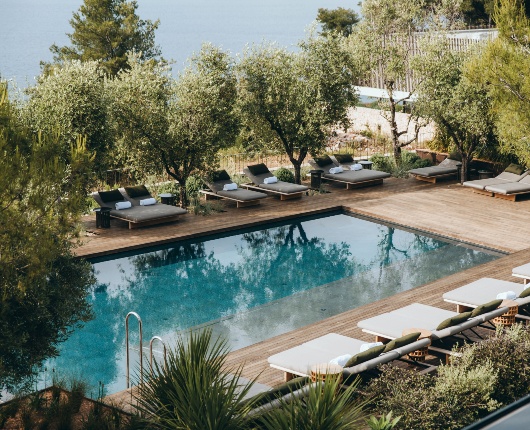
Most visitors to the island book into one of the glitzy hotels in Hvar Town, but there are several other options – Stari Grad, Jelsa and Vrboska – that offer quieter stays and a chance to be away from the main hubbub. In Stari Grad, the Maslina Resort is a contemporarily-designed bolthole, set above the bay, with pebble coves and sunbathing decks set among the pines, a world-class spa and Michelin-starred restaurant. For something simpler, the Heritage Villa Apolon is an elegant 19th century neoclassical villa with seven coolly minimalist bedrooms.
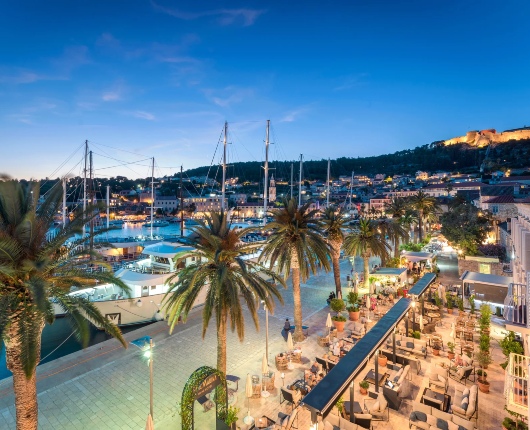
In Hvar Town, several of the hotels open straight onto the main square; the Riva Marina, with its elegant waterfront terrace, is ideal if you want to be right in the buzz, while the Amfora Hvar Grand Beach Resort is a great choice for families, with a kids’ club and rooftop gym. There are some lovely options a short walk away; the Podstine, a mile from the Old Town, is simpler than some but does open onto its own private beach – as does the chic Beach Bay hotel, with rooms set in the shadow of the Franciscan Monastery.
Jelsa, in the middle of the island, is one of my favorite spots, with its own elegant harbor, promenade and tangle of streets in the Old Town, dotted with konobas and wine bars. Accommodation in town tends to be simple, but just up the road in Vrboska the Senses Resort, surrounded by pine forest, makes a wonderfully peaceful base.
What to Do
Although it’s tempting not to stray beyond Hvar Town, there is much to see on the island – and an excellent bus network makes it easy to get around independently if you don’t want to hire a car or scooter. A day discovering the island’s quieter, inland villages makes a great contrast to the busy coastline; potter the quiet streets of Brusje, famed for its rosemary and lavender oil, wander among the traditional stone houses in Vrisnik and take in the views from Malo Grabje, an abandoned village that makes an ideal lunch stop, with two great restaurants.
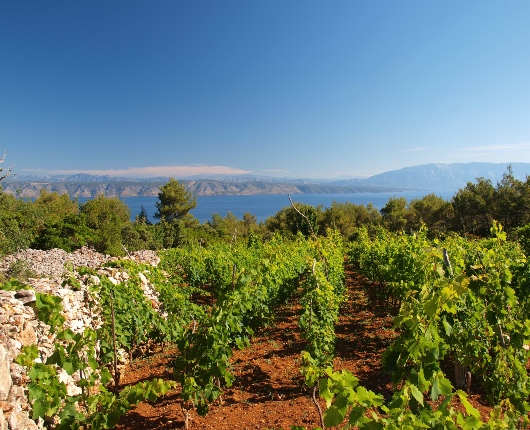
In late May, June and July the lavender fields are in bloom, with great swathes of purple rolling out along the Hvar-Stari Grad road and around the inland villages, with designated walking routes to make the most of the sweetly-scented countryside. Hvar is also famous for its wine and olive oil production, with many vineyards open to tourists for tastings and tours. Hora, set right in the middle of the Stari Grad plain, offers wine tastings along with platters of local cold meats and cheeses, while the Zlatac Otok winery, set on the island’s steep southern slopes, is famous for its acclaimed Posip and Plavac Mali – two of Croatia’s most classic wines.
Top Attractions
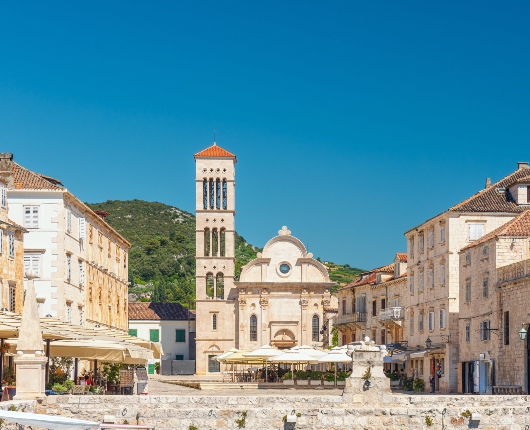
Any visit to the island should begin with an exploration of Hvar Town. St Stephen’s Square (also known as Pjaca) is the place to start; Dalmatia’s largest piazza is flanked by a clutch of dramatically beautiful buildings, including St Stephen’s Cathedral, the Bishop’s Palace and the Arsenal, all dating back to the 15-17th centuries. The Bishop’s Palace is the one to visit, with an interesting collection of religious artifacts, paintings and sculptures exhibited against a backdrop of pristine medieval architecture; intricate stone carvings and ornate windows. Don’t miss the chapel, covered in exquisite frescoes, while the leafy courtyard makes an ideal place to sit and draw breath before re-entering the busy piazza.
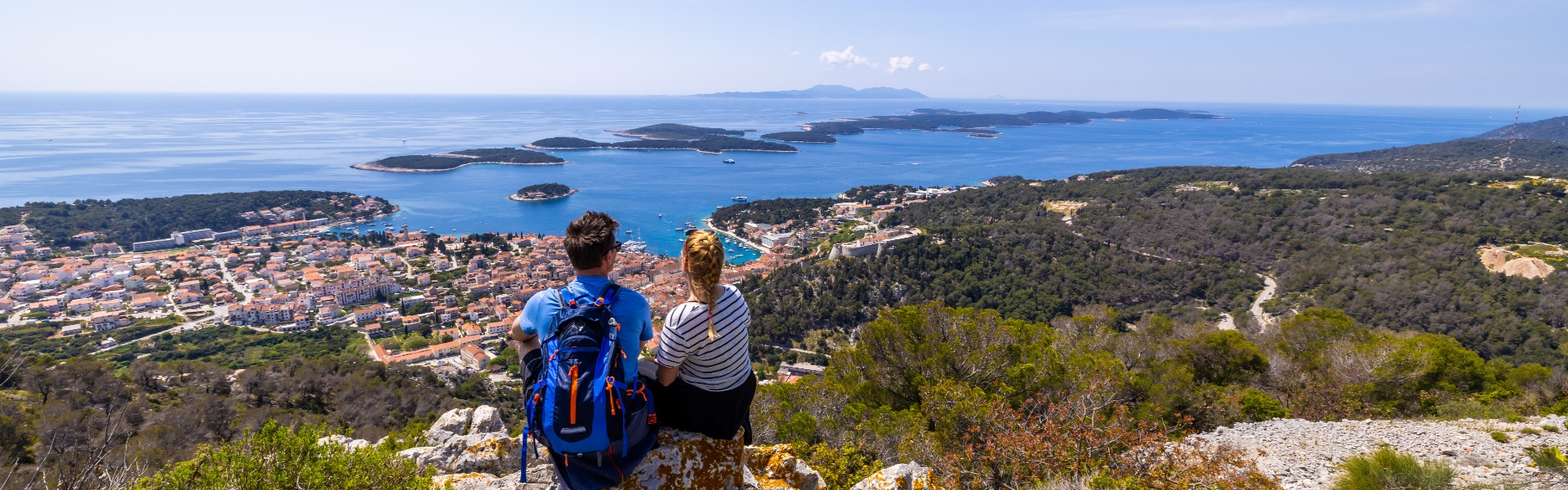
From the piazza, it’s a steep – but worthwhile – pull up to the Trdava Fortica – a 13th century fortress, which has protected the town from the many invaders that have descended over the centuries. The steps give way to a path through shady pine forest; take water and a snack as, although there is a small museum inside the fortress, the view from the hilltop is the real draw. Back at sea level, the Franciscan Monastery has a beautiful waterside location, Renaissance cloisters and an interesting collection of medieval nautical charts, documents and artworks.
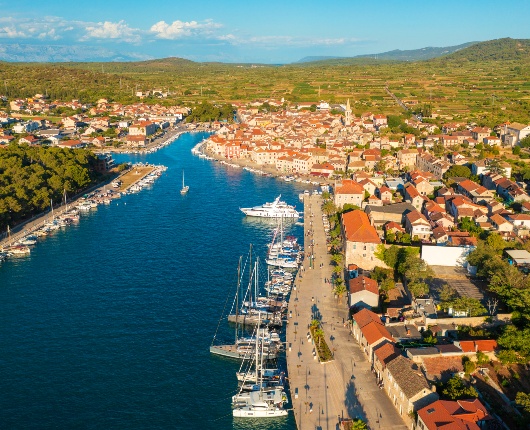
Stari Grad, a half-hour bus ride from Hvar Town, is the historic heart of the island – and claims to be the oldest town in Croatia. Dip into the Stari Grad museum for Roman artefacts (including shipwreck cargo from the 4th century AD) and an impressive re-creation of a ship captain’s room during the 18th /19th centuries, all set in a glorious 19th century palace. St Stephen’s Cathedral, on the square of the same name, is also worth a peek, with some wonderful artworks by Venetian artists.
Outdoor Activities
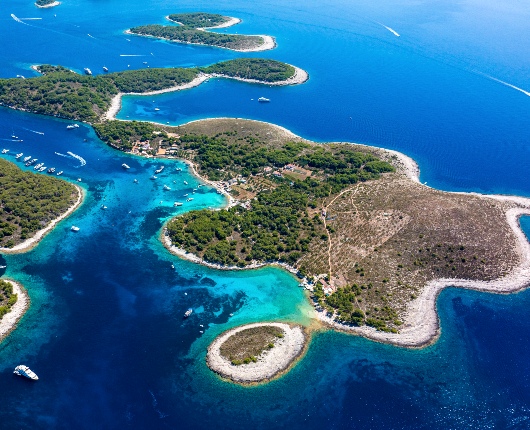
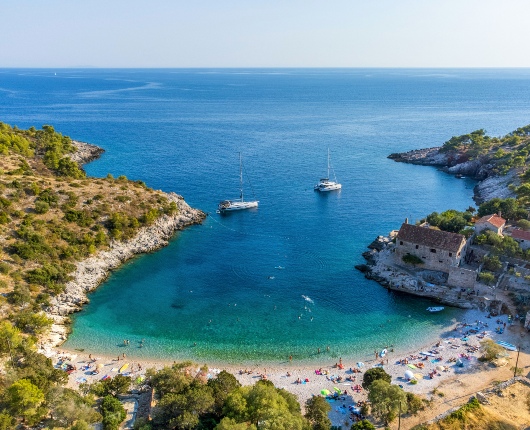
If there’s a more delightful way to spend a day than cruising around the charming Pakleni islands, stopping off to swim and snorkel, with lunch at one of the waterfront restaurants that fringe the sea, I’ve yet to find it. Since 2022, anyone wanting to hire a boat independently must have a license, but all this means is you have to hire a skipper, who does all the sailing and hard work, leaving you free to enjoy the trip.
Alternatively, water taxis from Hvar Town will drop guests off at any of the islands, including Marinkovac for the lovely Mlini beach. For more of a gentle potter, half-day kayaking tours are a great way to explore the jagged coastline close up, while a sunset cruise is a lovely way to end the day. For experienced divers, the wreck of an English merchant boat, the Paulina, is a fantastic sub-aqua adventure, with several more straightforward sites for beginners.
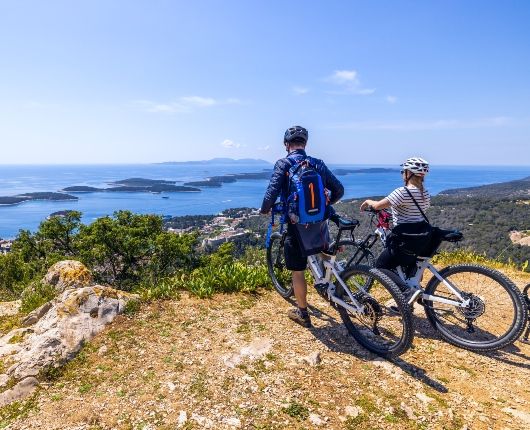
Back on dry land, the Stari Grad plain is a big draw for cyclists, hikers and historians, who come to explore the unspoilt natural landscapes that have barely changed since the Ionian Greeks arrived and began farming it in the 4 th century BC. A UNESCO World Heritage site, bike routes weave through the vineyards and olive groves that have stood for over two millennia, with the flat terrain making it ideal for cyclists of all levels. To explore the island’s quietest corners, quad bike tours offer the chance to get off road and immerse yourself in Hvar’s glorious scenery.
Hvar’s Beaches
In spite of the number of visitors to the island, Hvar’s 250-km long coastline is fringed with dozens of beaches, coves and bays, meaning it’s always possible to find a quiet stretch of sand or pebbles, if you’re prepared to drive or walk a little further. The most accessible beach from Hvar Town is Pokonji Dol – around 25 minutes’ walk, with two restaurants and sunbeds for hire.
More popular (and thus more crowded) is Dubovica; around 8kms from Hvar Town, with a ten-minute walk down to the beach from the road. Parking is limited, so either go early or take a boat taxi from Hvar Town (just ensure you tell them what time to pick up). The Konoba Dubovica is a lovely shady spot to retire to for lunch; order the fritto misto for the crispiest, freshest calamari you’ve ever tasted.
Lesser-known beaches include Malo Zarace – around half an hour’s drive from Hvar Town, off the main road to Stari Grad and Mina beach, a short stroll from Jelsa, where a chorus of cicadas and a backdrop of dense pine forest make it a lovely spot for a dip.
Food & Drink
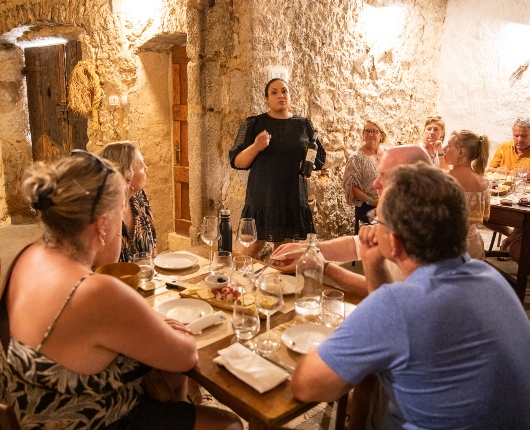
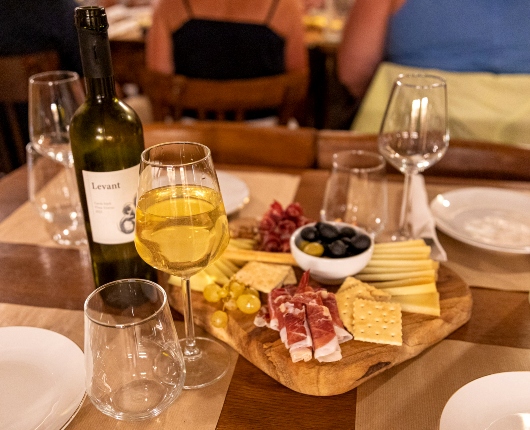
Tangy goat’s cheese, salty anchovies and plump, purple olives: freshly-caught fish and seafood and desserts infused with cinnamon and spices, these are the flavors of Hvar. To understand the island’s wealth of produce, visit Hvar’s daily market, where the fish stalls deliver the seafood that goes straight into restaurant’s cold counters and diner’s plates.
Gregada is the island’s signature dish; a simple fish casserole with garlic, onions, potatoes and parsley, while salted anchovies and sardines are a popular starter, often served with olives. Carnivores are well catered for too, with wild boar dishes – from burgers and sausages to pate – a popular choice, along with pasticada, a rich beef cassrerole.
For a lunchtime snack, pogaca is a succulent bread, stuffed with anchovies, tomatoes and onions, while the island’s goats’ cheese is delicious – buy from the Lupi family’s stand at Hvar market.
However full I am, it’s often impossible to resist a bowl of ‘drunken figs’ , each one stuffed with an almond and drenched in a secret recipe liqueur (find them at Konoba Menego). If space allows, I might have a slice of lavender cheesecake; the ‘cheese’ a vivid purple color, best eaten from the Sweet Pastry Shop in Hvar Town.
Bars & Restaurants
Coffee lovers should start their day at Kava 37, a speciality coffee shop in the back streets of Hvar Town, with its own roastery in Split. To try some of Hvar’s – -and Croatia’s best wines, bag a table at Tri Prsuta (The Three Hams) in Hvar Town. Allegedly this chic bar has over 1000 euros’ worth of wine open at any one time; for a top quality red try the Zlatan Pavac Grand Cru, with a platter of local salty cheese. For sundowners, the Aloha bar, right on the seafront in Hvar Town, is a great choice for an end-of-the-day cocktail.
Some of Hvar’s most memorable meals are to be found not in the glamorous streets of Hvar Town, but in the ruined villages and quiet farms that dot the island. Stori Komin sits on the top of a hill above the ruined village of Malo Grablje; come for home-cooked dishes – grilled meats, all served with vegetables from their own garden. Reservations are essential and ring in the morning if you want to order peka. Konoba Humac is another find, located by the ghost town of Human, where dinner is taken by candlelight (no water or electricity) at stone tables surrounded by trees and vineyards.
Top Hvar Travel Tips
- Invest in a good pair of swim/beach shoes – Hvar’s beaches are pebbly and sea urchins lurk between the stones.
- If you choose a boat trip that includes a visit to the Blue Caves on Bisevo island, be aware that sometimes it can take an hour of queueing for each boat to enter.
- Although it’s tempting to eat on Hvar’s main piazza, many of the most authentic restaurants are found in the tangle of streets behind; Dalmatino, serving classic local dishes, is one of the best.
- If you want to buy fish or seafood from Hvar’s market, it pays to get there early. The market opens at 6am and most is earmarked for restaurants – by 7am there’s little left.
More Inspiration
The 10 Best Things to Do in Hvar
Croatia Specialist
Situated in the Adriatic Sea towards the southern tip of Croatia’s mainland, Hvar is the most world-renowned of all of...
Read More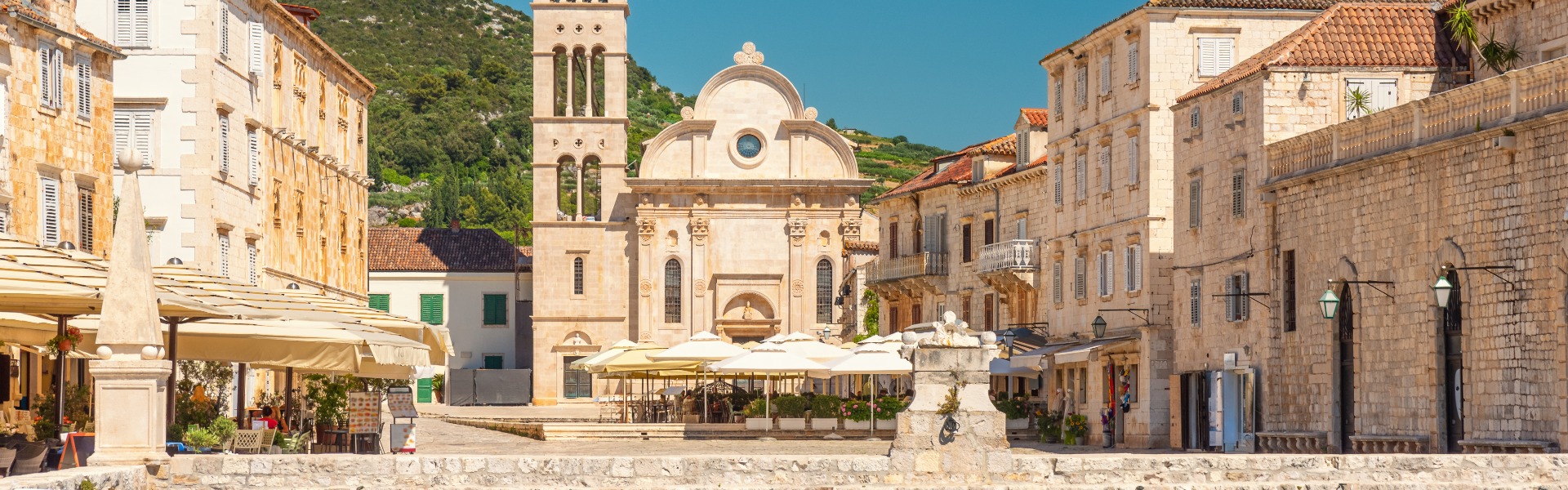
Hvar or Dubrovnik: Which Should I Visit?
Croatia Specialist
As the sun-kissed shores of Croatia beckon travelers from around the world, one question emerges on the Adriatic horizon: Hvar...
Read More
A Guide to Croatia’s Most Romantic Islands for Honeymooners

Croatia Specialist
Has the land of a thousand islands captured your heart and left you wondering where to honeymoon in Croatia? The...
Read More
Best Hidden Gems in Croatia
Croatia Specialist
Croatia has become one of the hottest travel destinations in the world with its endless miles of beautiful coastline, hundreds...
Read More
Cruising the Dalmatian Islands: A Guide to the Best Routes and Itineraries

Croatia Specialist
With over a thousand Dalmatian Islands to explore, you may be wondering what the best route to cruising Croatia’s Islands...
Read More
Island Hopping in Croatia
Croatia Specialist
While many people are familiar with popular islands like sunny Hvar, known for drawing celebrities and international jetsetters, there’s an...
Read More